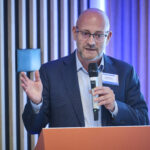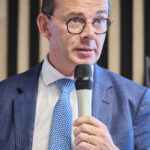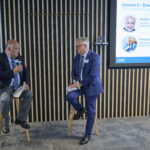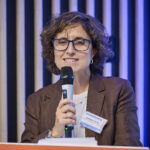

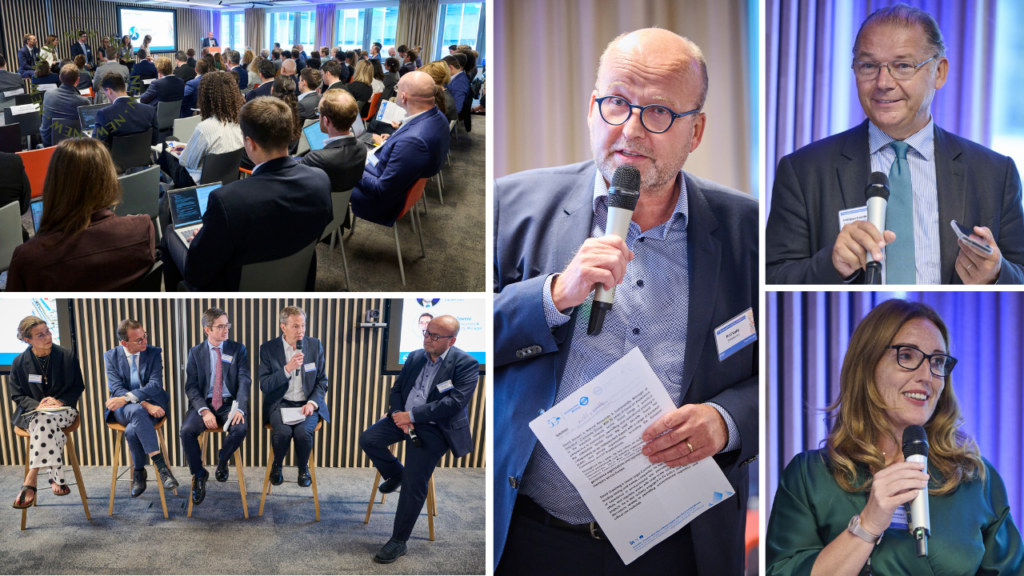
Permitting should be a strategic enabler for Europe, not a bottleneck to investment. That was one of the key messages from the first European Conference on Permitting, held on 8 September 2026 in Brussels and co-organised by the Informal Coalition on Permitting, of which Euromines is a member.
Held under the theme “From Bottlenecks to Breakthroughs: Rethinking Industrial Permitting for a Competitive & Climate-Neutral Europe,” the conference brought together EU policymakers, industry representatives, national authorities and civil society to discuss the challenges facing industrial permitting and explore practical ways forward.
Addressing the permitting challenge
Speakers and participants highlighted that the issue extends beyond lengthy timelines. Fragmented procedures, duplication, limited permitting capacity, diverging interpretations and overlapping legislative requirements can add complexity and create uncertainty for projects and investors.
The discussion focused on a number of potential solutions, including:
- Clearer and more coherent legislation and implementation
- More proportionate and risk-based permitting approaches
- One-stop shops with clear and meaningful timelines
- Stronger national permitting capacity, staffing and skills
- Greater use of digital procedures
- Better coordination of infrastructure and investment planning
- Sharing best practices and strengthening community engagement
Towards better permitting
A recurring theme throughout the conference was that simplification alone is not enough. Participants discussed the need for permitting systems that are more efficient and predictable while maintaining strong environmental standards.
The interaction between different EU legislative frameworks was also examined, including the Water Framework Directive and the Critical Raw Materials Act. Greater coherence between these frameworks was identified as an important factor in reducing unnecessary complexity.
Participants also discussed the proposed Permitting Omnibus and its potential to reduce duplication and gold-plating, improve legislative coherence and make permitting processes more workable.
For the mining and raw materials sector, effective permitting is particularly relevant to projects supplying the materials needed for renewable energy, electrification and energy storage.
The conference highlighted the importance of moving beyond the question of simply making permitting faster towards developing better permitting: processes that are clear, predictable and workable while supporting investment and maintaining appropriate environmental safeguards.
Euromines thanks all speakers, panellists and participants for contributing to a constructive and solutions-oriented discussion.