

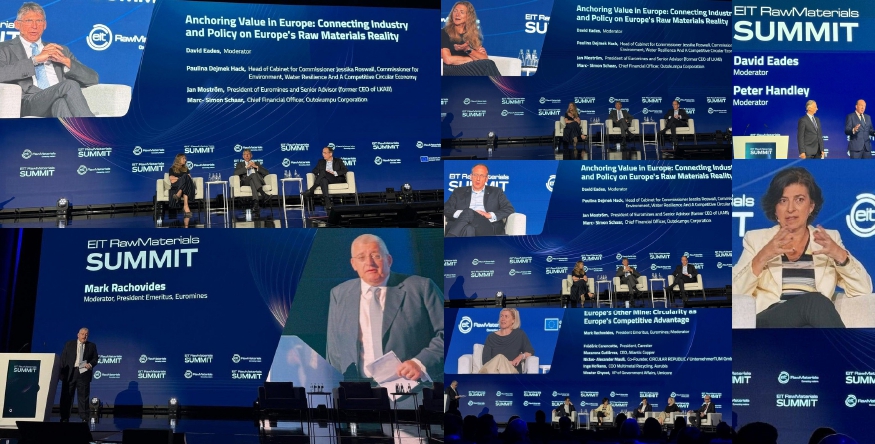
Europe risks weakening its industrial base and deepening strategic dependencies unless it urgently strengthens its raw materials value chain, Euromines highlighted during high-level discussions at the EIT RawMaterials Summit 2026.
As the European Union advances implementation of the Critical Raw Materials Act (CRMA), the Carbon Border Adjustment Mechanism (CBAM), and the forthcoming Circular Economy Act, industry representatives called for a policy framework capable of translating regulatory ambition into industrial reality.
Jan Moström in “Anchoring Value in Europe: Connecting Industry and Policy on Europe’s Raw Materials Reality” Fireside Chat
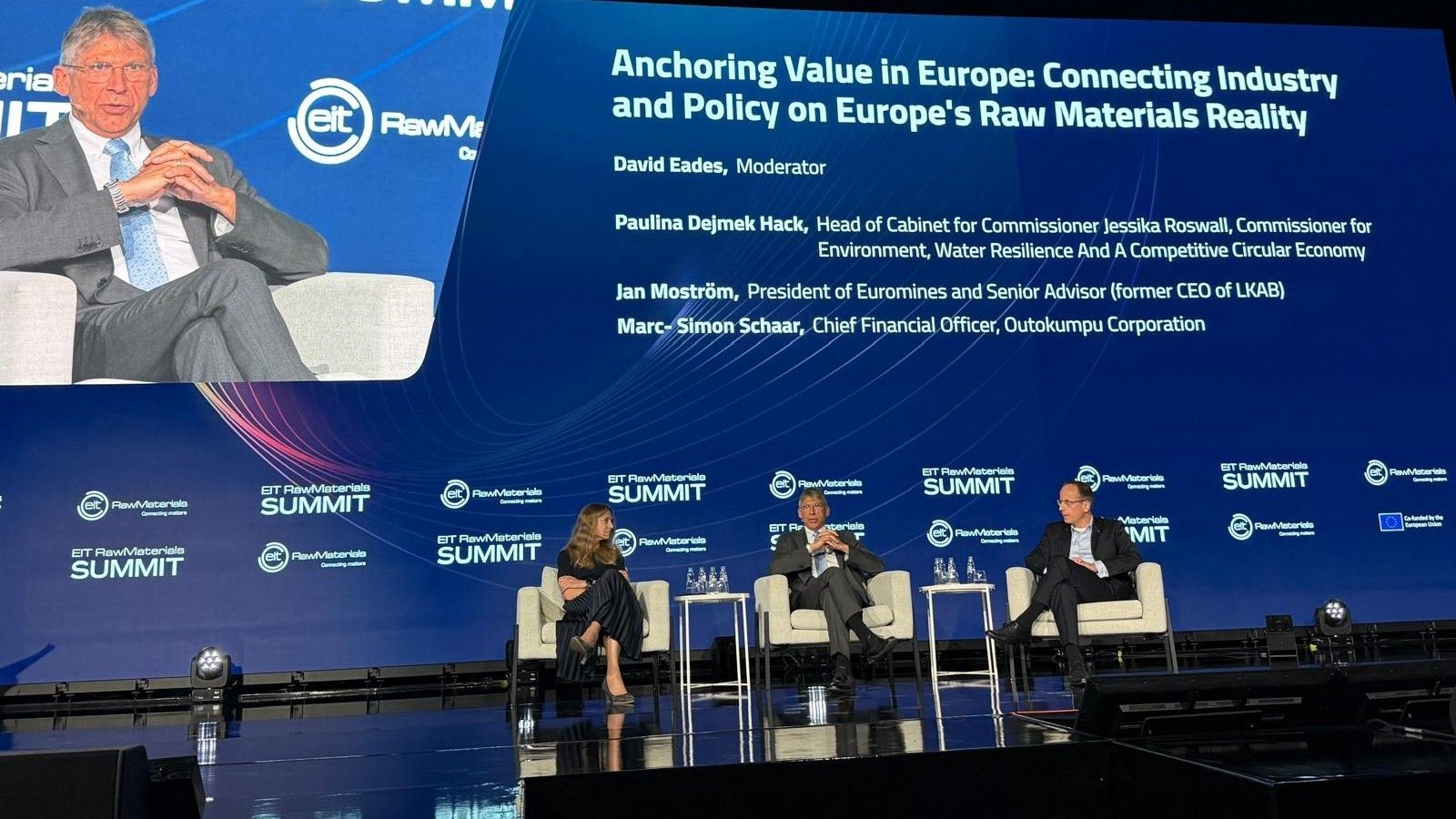
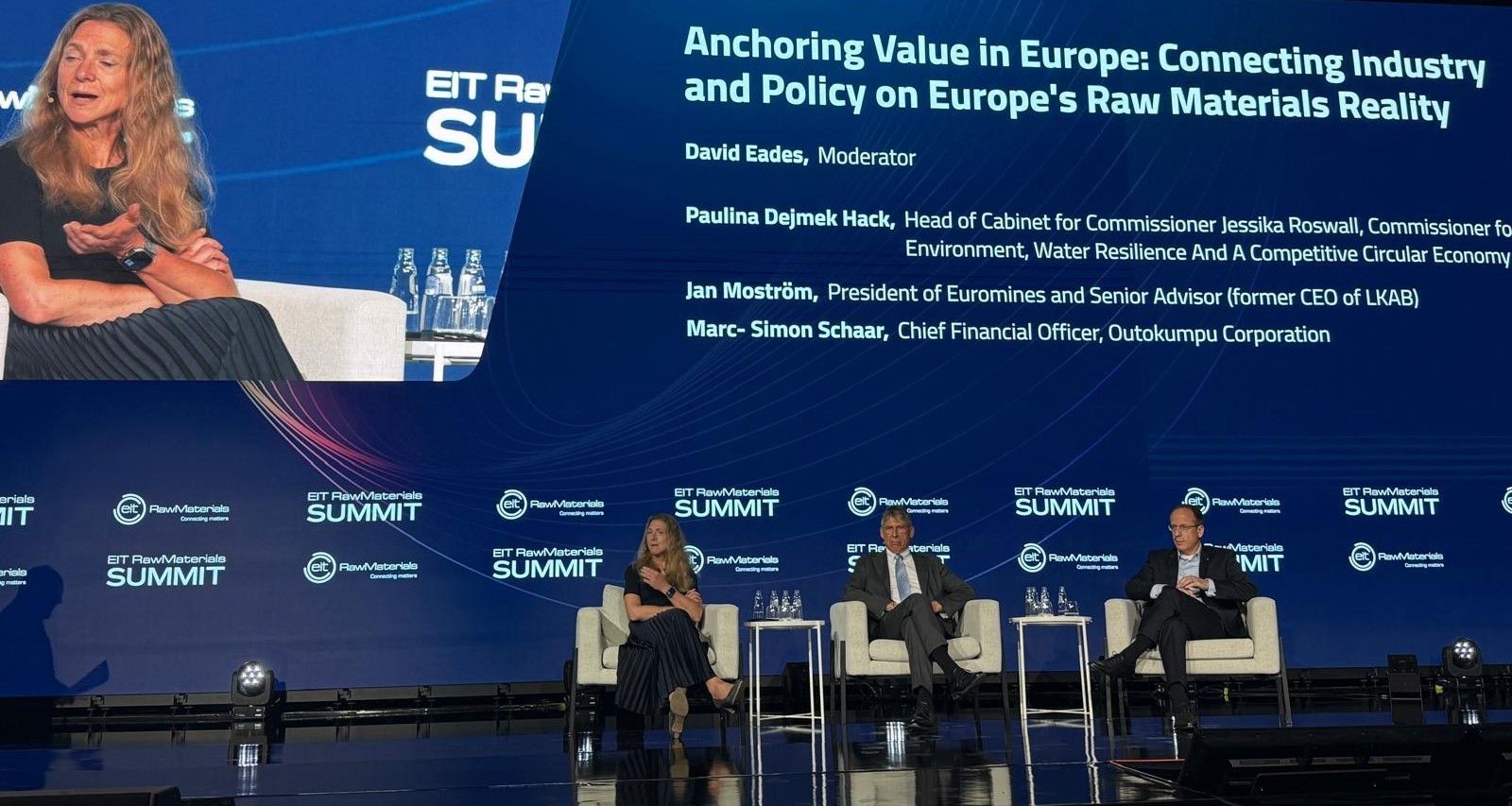
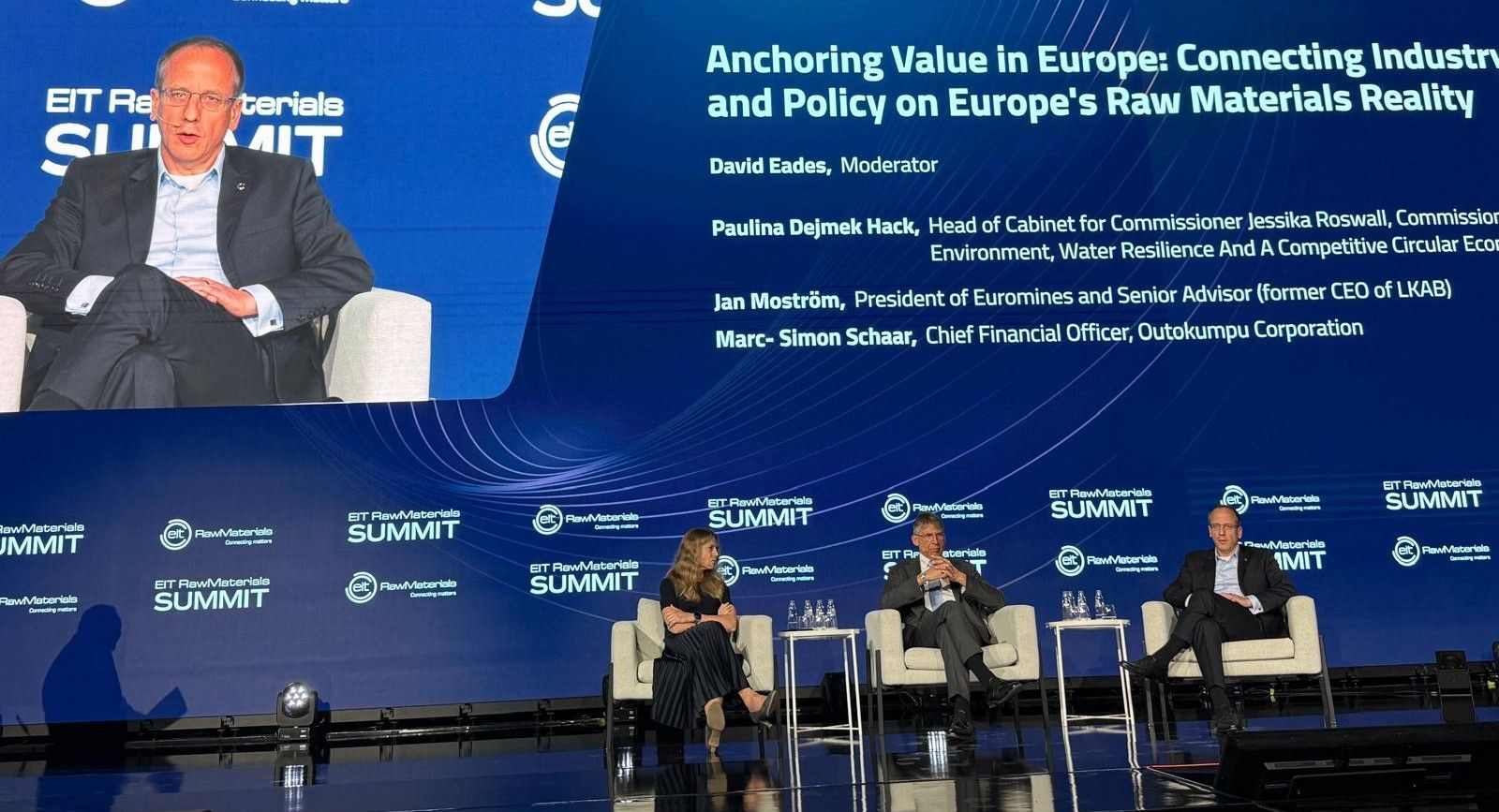
Jan Moström, President of Euromines, Senior Advisor and former CEO of LKAB, stressed that Europe’s competitiveness will depend on its ability to create stable, investable conditions across the entire raw materials ecosystem.
Moström warned that fragmented implementation, lengthy permitting procedures, and insufficient policy alignment continue to undermine Europe’s capacity to secure domestic supply chains and attract long-term industrial investment.
Strategic autonomy cannot be achieved through legislative ambition alone. Europe must accelerate project development, strengthen industrial competitiveness, and ensure regulatory coherence if it is to reduce structural dependencies on third-country sourcing of critical raw materials.
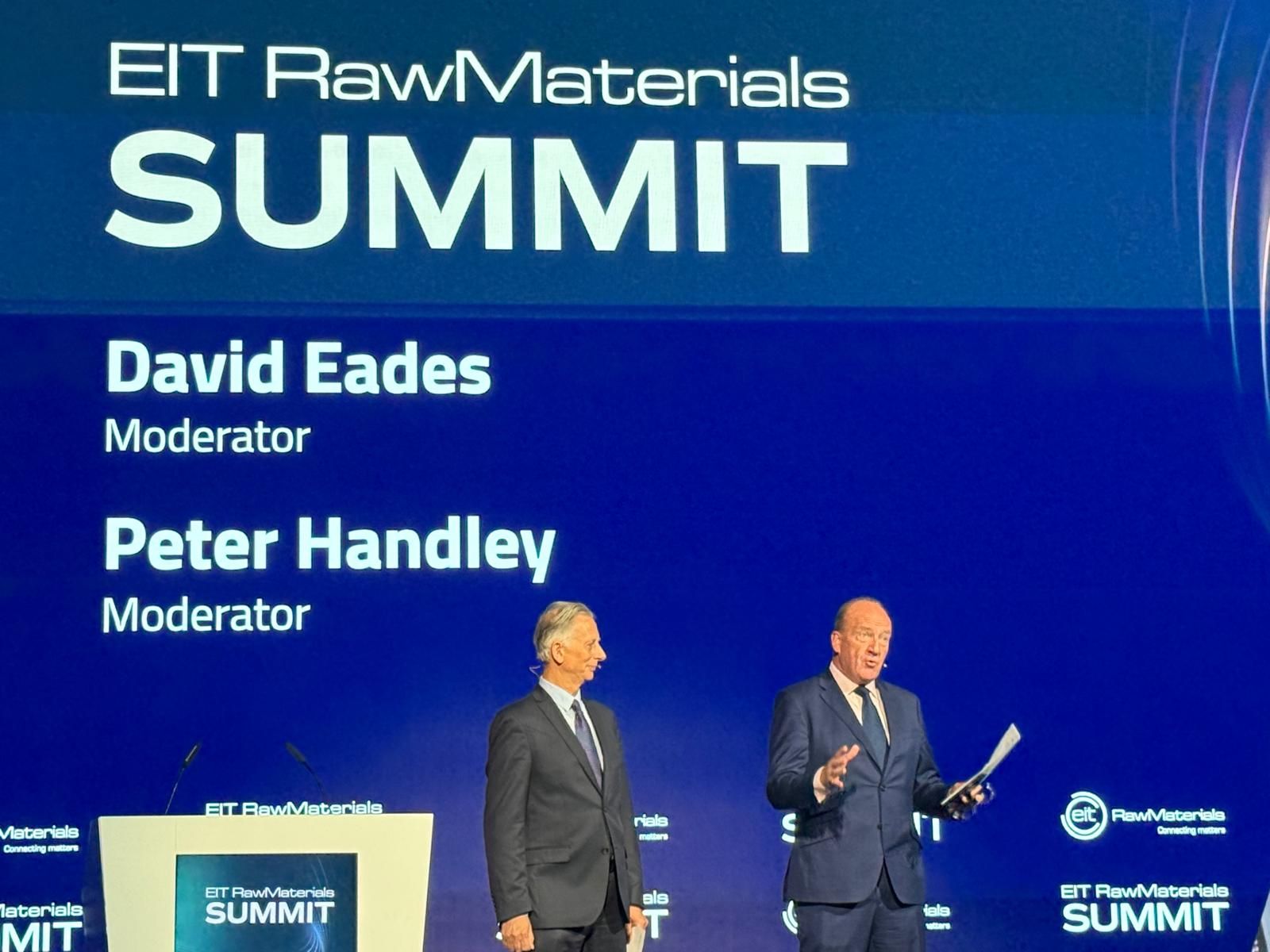
The panel brought together senior representatives from industry and the European Commission, including Paulina Dejmek Hack, Head of Cabinet for Commissioner Jessika Roswall, and Marc-Simon Schaar, CFO of Outokumpu Corporation. The discussion was moderated by David Eades.
Mark Rachovides in “Europe’s Other Mine: Circularity as Europe’s Competitive Advantage” High-Level Discussion on Scaling EU Circular Value Chains
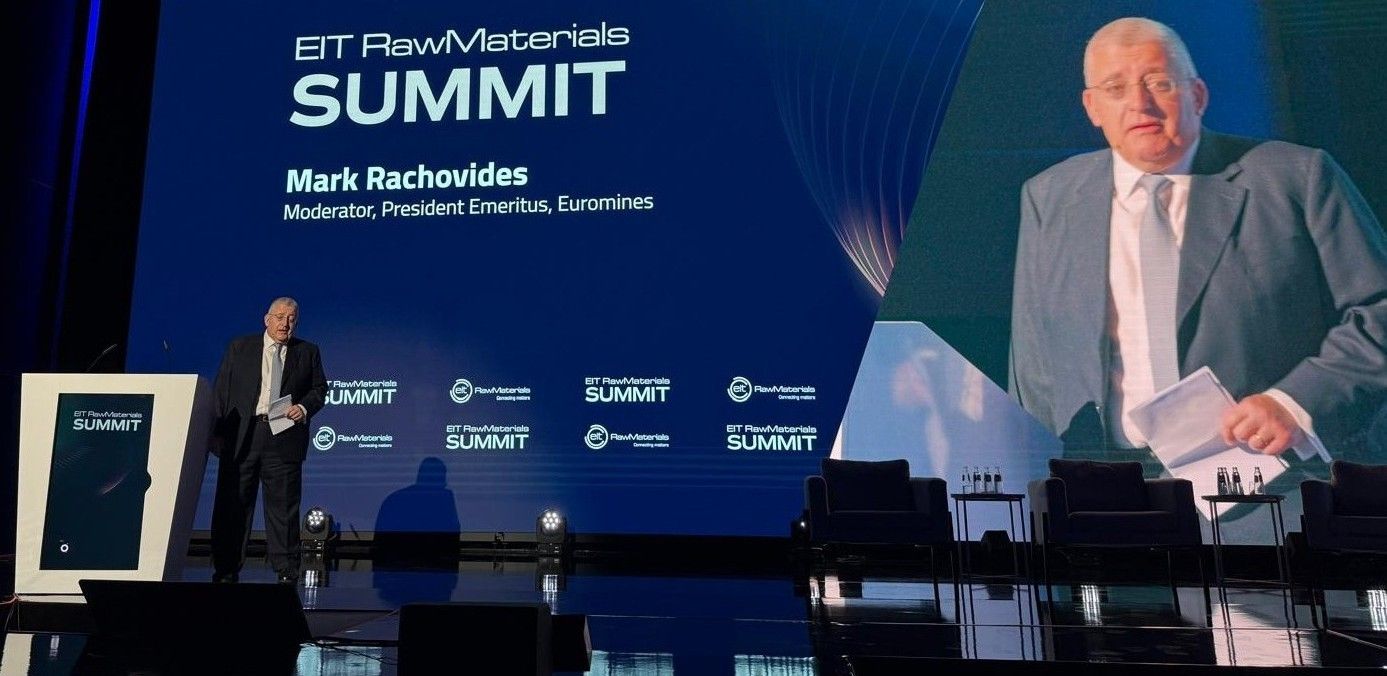
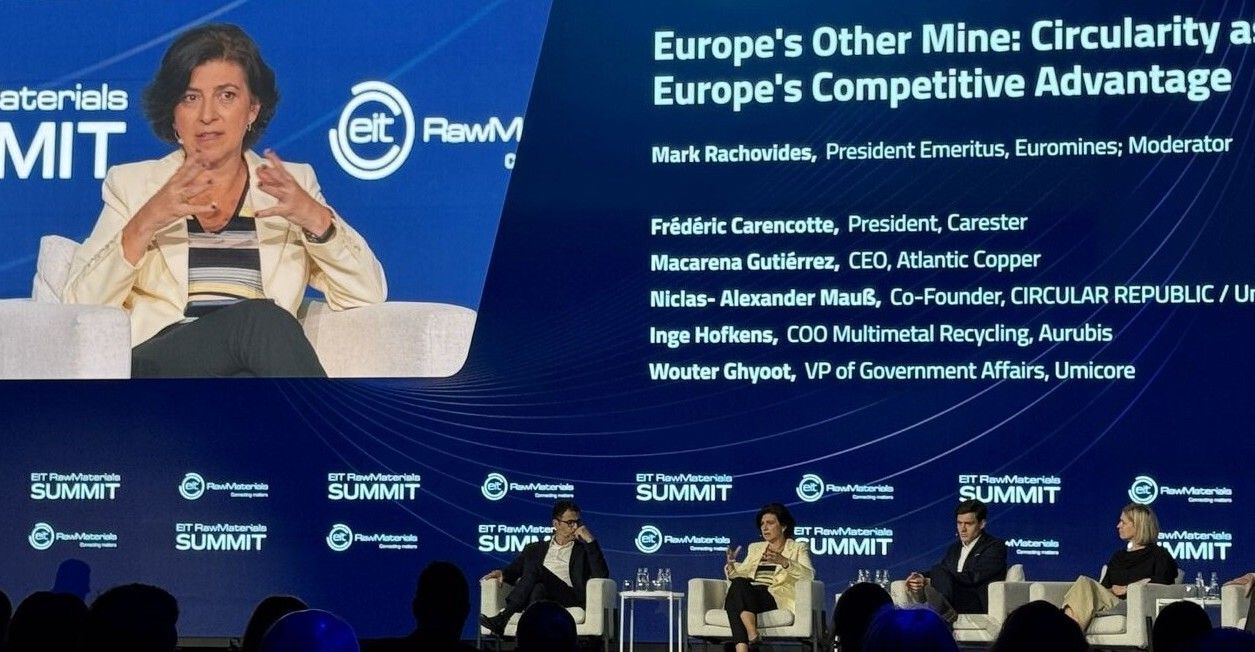
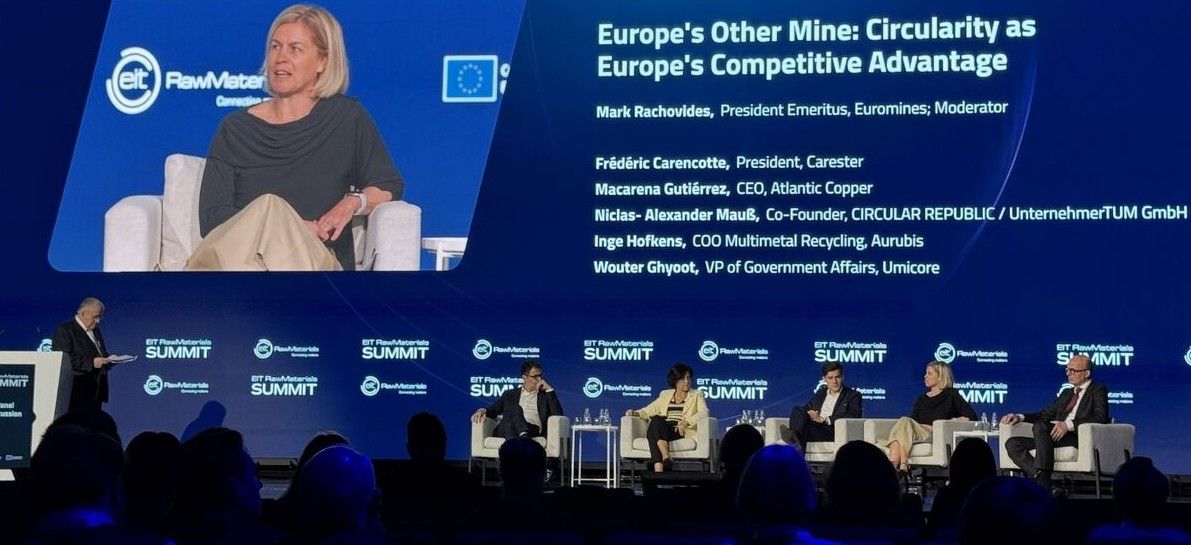
Mark Rachovides, President Emeritus of Euromines, moderated a high-level discussion on the strategic importance of circularity in Europe’s industrial agenda. The session examined barriers to scaling competitive secondary raw materials value chains.
Speakers stressed that circularity must be treated as a core industrial and geopolitical priority, central to Europe’s resilience, supply security, and economic sovereignty.
While Europe possesses significant secondary raw materials potential, panellists highlighted persistent obstacles including fragmented regulation, insufficient investment incentives, financing gaps, and the absence of integrated market structures capable of supporting industrial-scale circularity.
Against a backdrop of geopolitical volatility and intensifying global competition for critical minerals, participants warned that Europe cannot afford continued delays in mobilising domestic primary and secondary raw materials capacity.
The session featured Frédéric Carencotte, President of CARESTER, Inge Hofkens, COO Multimetal Recycling at Aurubis, Macarena Gutierrez, CEO of Atlantic Copper, Niclas-Alexander Mauss, Co-Founder of CIRCULAR REPUBLIC / UnternehmerTUM GmbH, and Wouter Ghyoot, VP Government Affairs at Umicore.
From Regulatory Ambition to Industrial Delivery
Across both discussions, a consistent message emerged: Europe’s industrial resilience and strategic autonomy will depend not only on political targets, but on the speed and coherence of implementation.
The challenge is no longer defining Europe’s raw materials strategy. The challenge is execution: creating the regulatory certainty, investment environment, and industrial scale required to secure Europe’s position in an increasingly contested global raw materials landscape.