

At Euromines, we believe that sustainability and responsible resource management are essential to a competitive and resilient mining sector in Europe.
On World Environment Day 2026, we showcase how our members are turning sustainability ambition into action across Europe’s mining and minerals industry, from environmental protection and decarbonisation to biodiversity restoration and responsible resource use, highlighting the concrete steps shaping a more sustainable future for mining in Europe.
ABB – eMine™ Battery-Electric Trolley Truck System
ABB eMine™ enables the transition from diesel-based mining to fully electrified operations, supporting the shift toward low-emission, energy-efficient mining.
At the Kristineberg mine in Sweden, in collaboration with Boliden and Epiroc, a battery-electric trolley truck system is enabling fossil-free underground mining in practice.
The solution reduces CO₂ emissions, eliminates exhaust gases, and improves overall energy efficiency, while advanced digital tools help optimise energy use and operational performance across the mine.
ABB eMine™ is accelerating the move toward cleaner, more efficient mining operations.
Primigea – Knauf Ecological Restoration Project (Gypsum Landscapes)
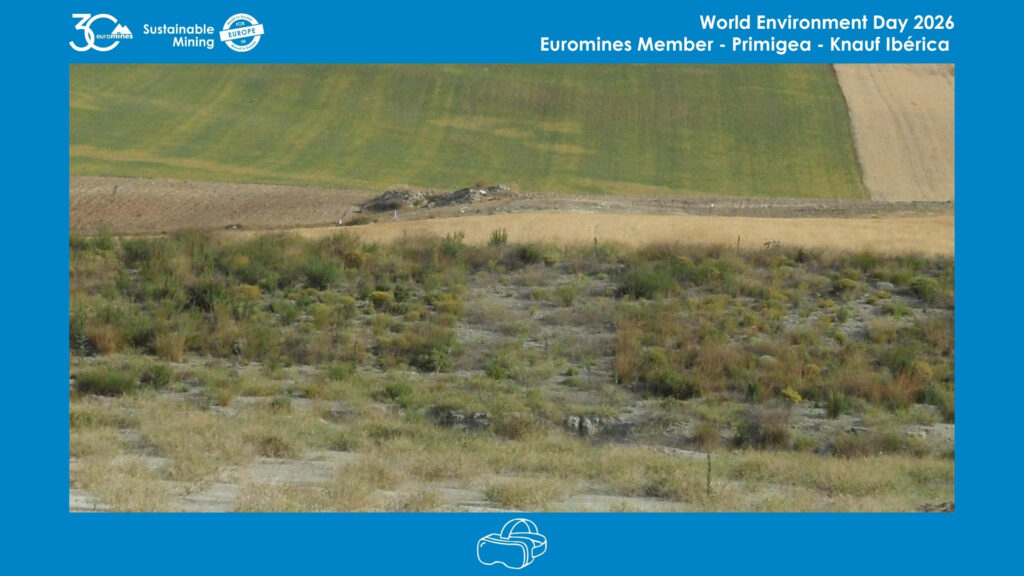
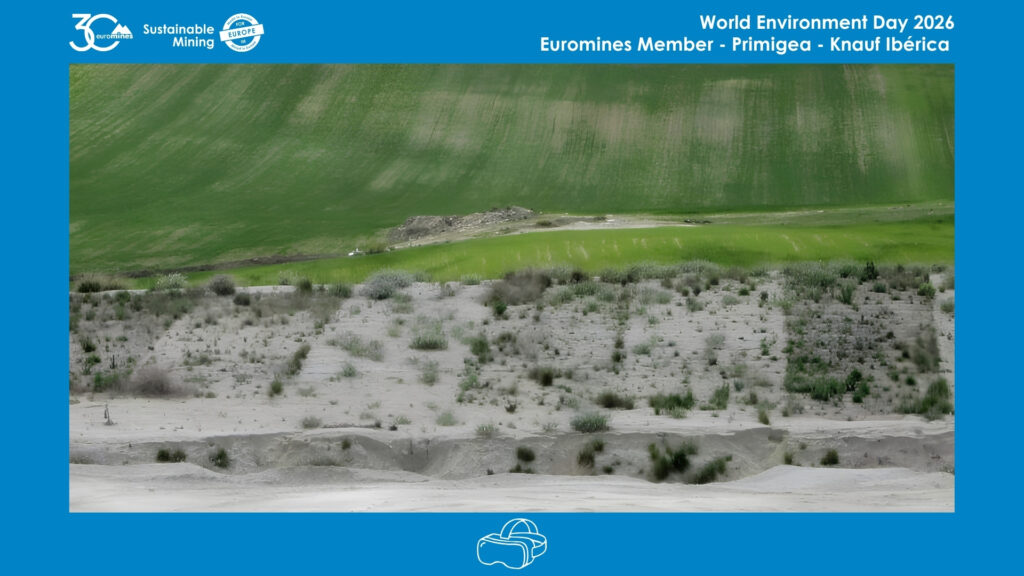
At Knauf Iberica, a member of Primigea (Spanish Confederation of Mineral Raw Materials Industries), sustainability is embedded in the way we operate. Through the Ecological Restoration Project in Gypsum Landscapes in Ventas de Huelma and Escúzar (Granada, Spain), we demonstrate how responsible mining can support biodiversity conservation, ecosystem resilience, and long-term environmental value creation by restoring rare gypsicolous ecosystems that host unique and often endemic species.
Developed with the University of Granada, the project combines scientific research and innovative restoration techniques such as native species planting, experimental seeding, and hydroseeding to improve ecosystem recovery. Beyond land rehabilitation, it also contributes to knowledge sharing and best practice development for the mining sector, showing how science and responsible mining can work together to protect biodiversity and restore landscapes.
KGHM - Falcon Conservation
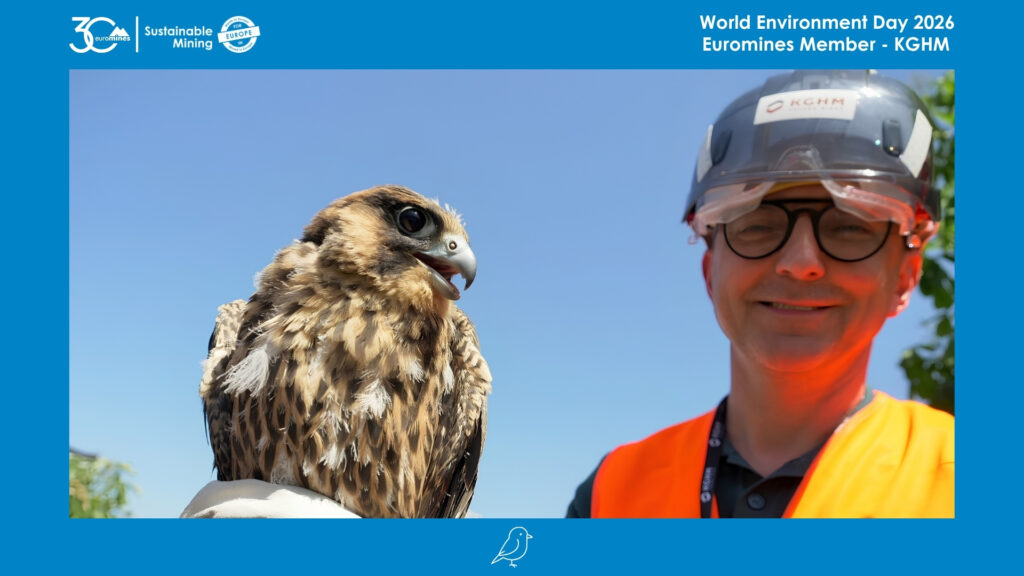
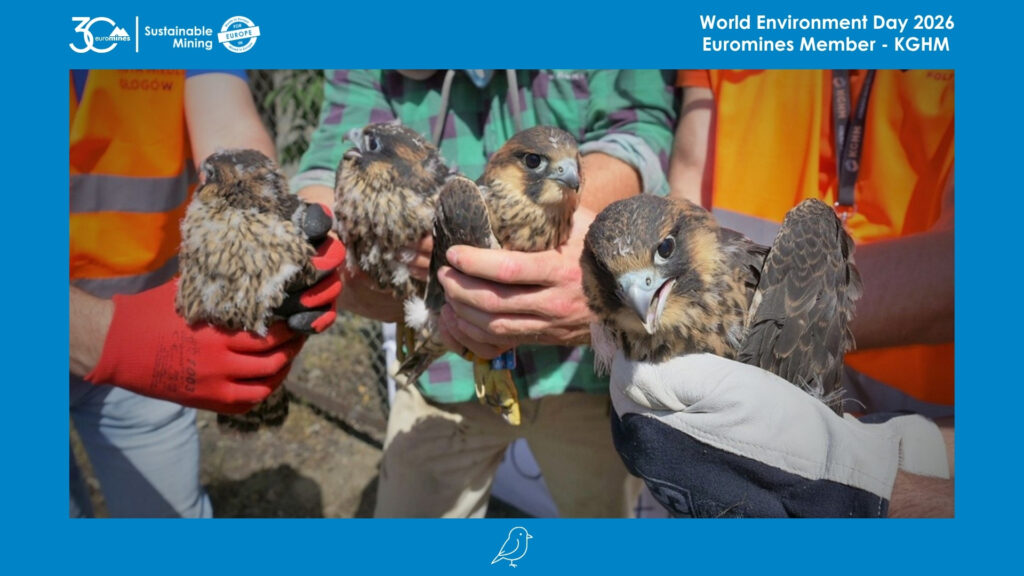
KGHM Polska Miedź S.A. continuously monitors local ecosystems and takes active steps to protect endangered plant and animal species. The areas surrounding the Głogów and Legnica metallurgical facilities in Poland are classified as woodland, providing a rich natural environment that supports a wide range of bird and animal species.
Since 2009, one of KGHM’s metallurgical facilities has become an important nesting site for falcons, among the rarest bird species in Poland. To support their presence, KGHM employees have constructed a dedicated nesting platform on the chimney of the Głogów Copper Smelter and Refinery. Each year, female falcons return to the site to lay their eggs.
This year, four young falcons have hatched and have been fitted with ornithological rings: yellow rings identifying birds nesting in urban areas, and blue observation rings for birds born in the wild. Over the past 18 years, a total of 54 chicks have hatched at this KGHM site.
LKAB - Scandinavia’s first Geomorphic test site
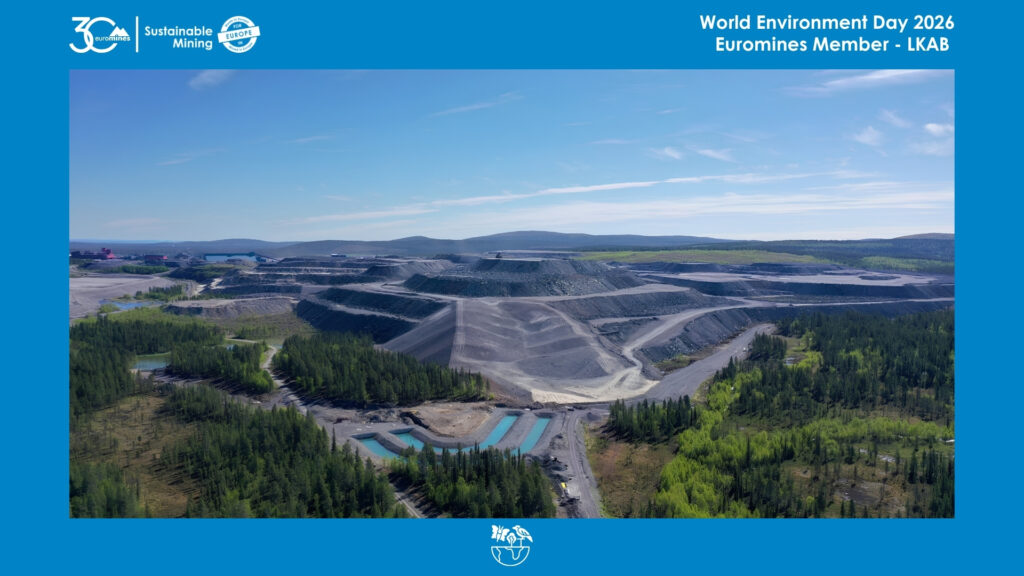
In 2022, LKAB established Scandinavia’s first geomorphic test site in Svappavaara, demonstrating how mining operations can support biodiversity and land rehabilitation while remaining active.
Using advanced modelling software and data from 30 local reference areas, barren rock is transformed into landscapes that resemble and function like the surrounding natural environment. The varied terrain creates conditions that support diverse plant life and ecosystem development.
The site is being restored to a lichen-pine heath habitat, with species including pine, reindeer lichen, lingonberry, and heather. Recognised as a Best Available Technique in Europe, geomorphic design helps integrate mining areas back into nature both visually and functionally.
Hellas Gold - Eldorado Gold - Skouries Project - Reducing environmental footprint through filtered tailings
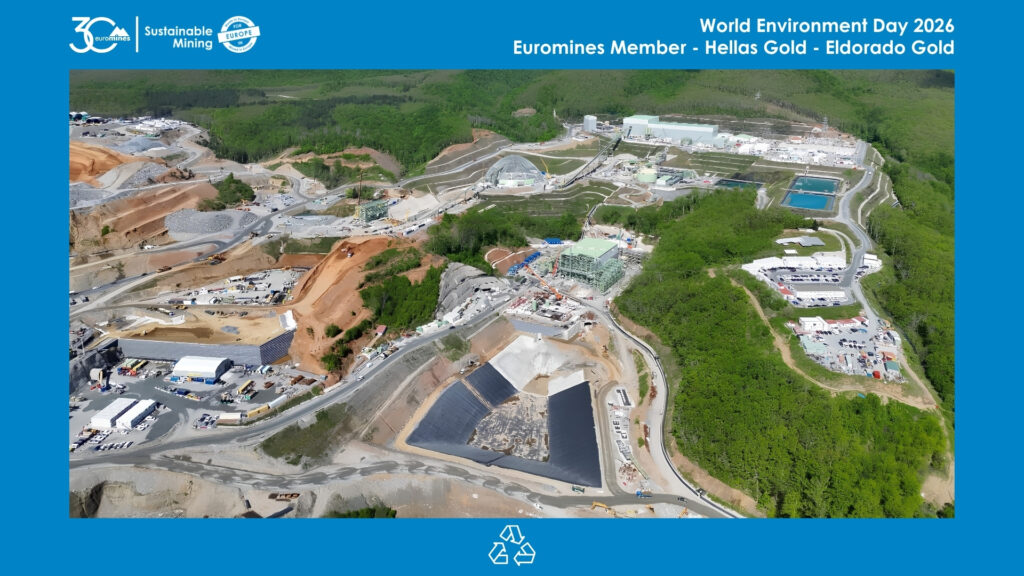
Hellas Gold, a subsidiary of Eldorado Gold Corporation, is investing in the sustainable development of the Kassandra Mines in northeastern Halkidiki, Greece. Across its operations, the company is committed to responsible mining practices that combine environmental protection, resource efficiency, innovation and long-term value creation.
At the Skouries copper-gold project, filtered tailings play a central role in the project’s environmental design. Unlike conventional tailings storage, this method removes most of the water from processing residues, creating a compact, sand-like material with greater stability.
The approach has enabled a 40% reduction in the project’s operational footprint compared with the original design, as only one tailings storage facility is required instead of two. It also supports significant water recycling and reuse, reducing the need for fresh water throughout the production process.
Together with progressive rehabilitation and the site’s planned integration into the surrounding landscape after closure, filtered tailings help minimise environmental impacts while improving resource efficiency and supporting long-term environmental stewardship.
Atalaya Mining - Restoration of old waste dumps
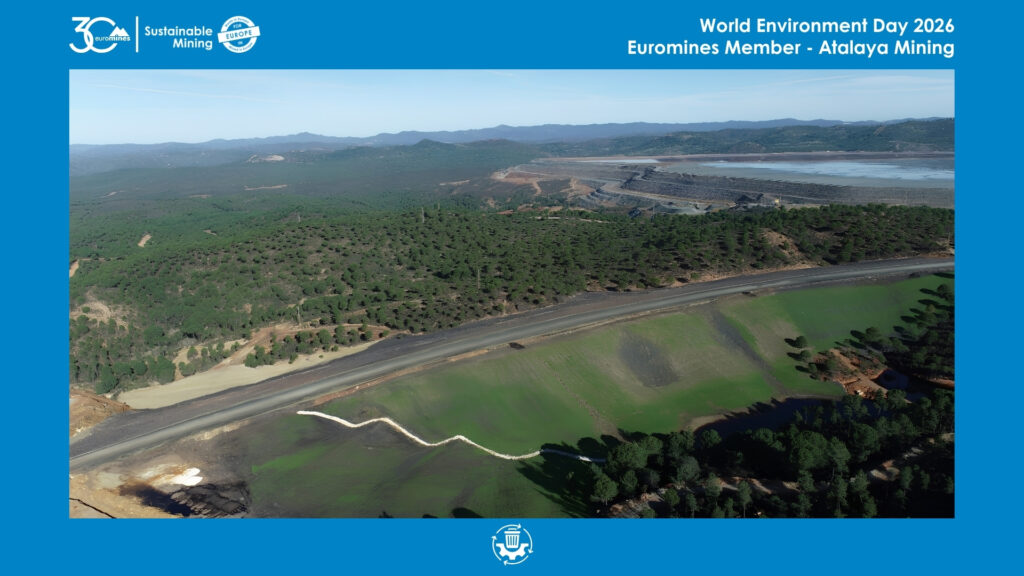
Atalaya Mining is finalising the restoration of historic waste dumps containing ilmenite near the Riotinto mine in Spain. The project involved removing approximately 150,000 m³ of waste, followed by the installation of sealing and water management systems to prevent acid or metal-laden runoff.
Using innovative geomorphological techniques, including the GeoFluv – Natural Regrade system, the site is being reshaped to blend with the surrounding landscape and support the natural regeneration of vegetation.
The project has gained recognition within the scientific community as a successful example of modern mine restoration. Although the waste was not generated by Atalaya Mining’s operations, its restoration reflects the company’s voluntary commitment to creating a positive environmental and social impact in the region.