Euromines & CEUTIA at PDAC 2026: Strengthening EU–Canada Raw Materials Cooperation

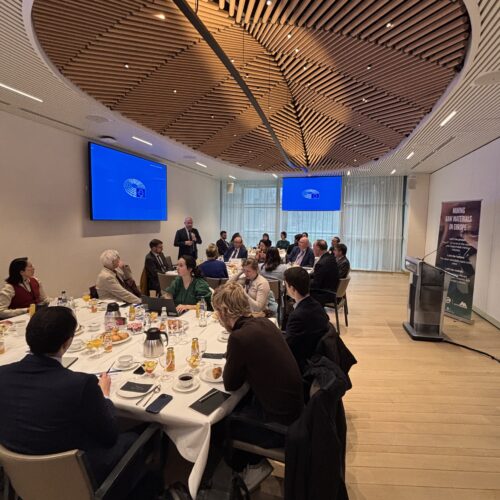
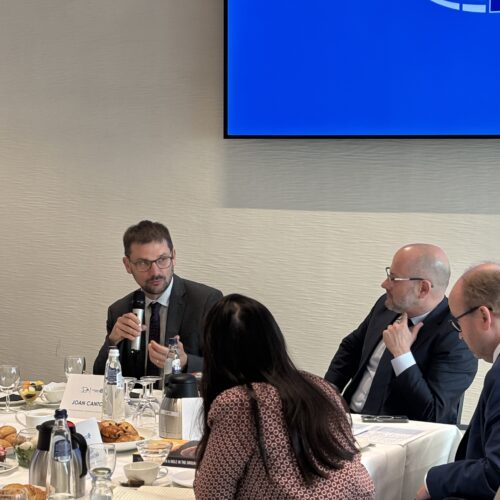
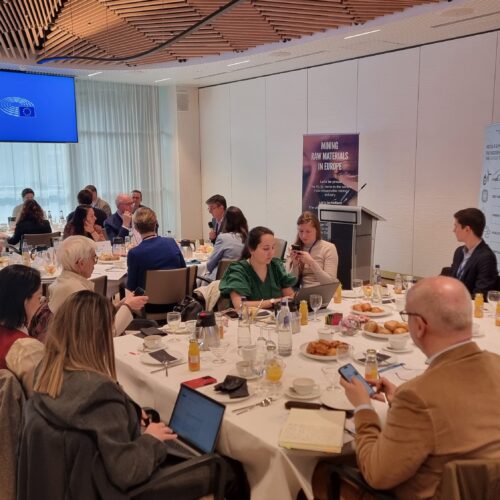
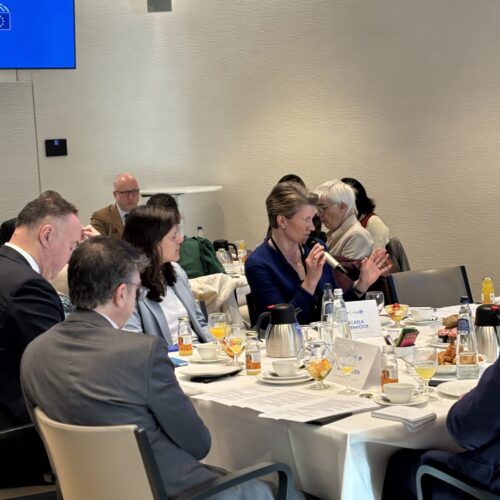
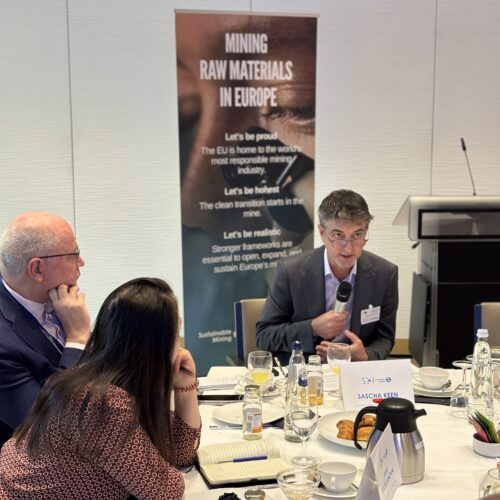
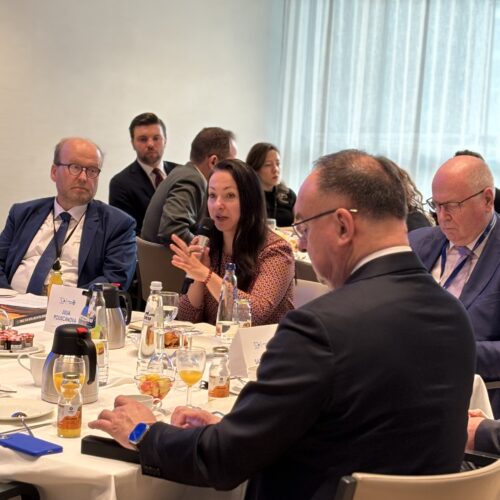
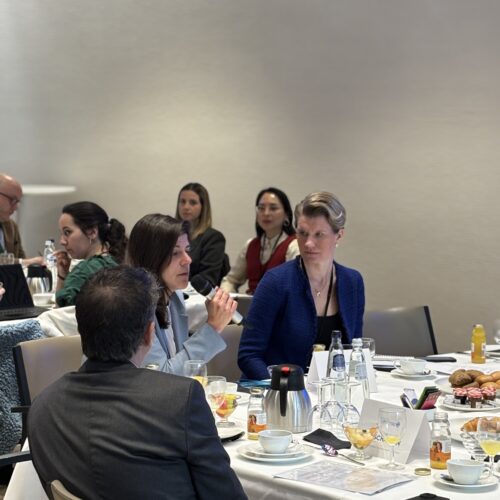
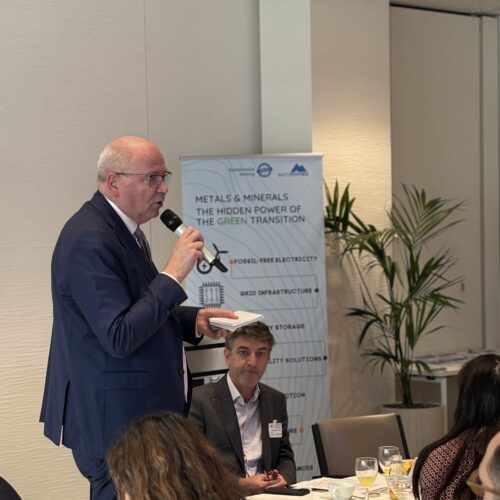
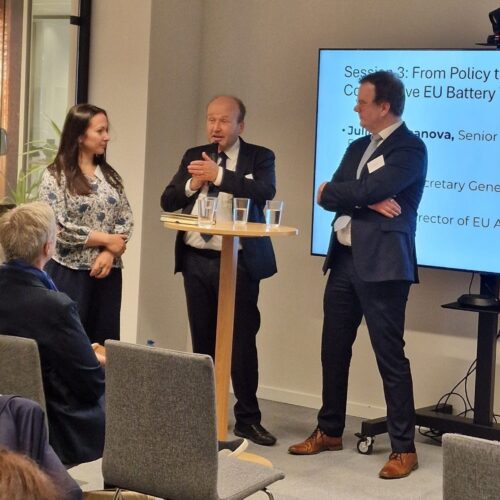
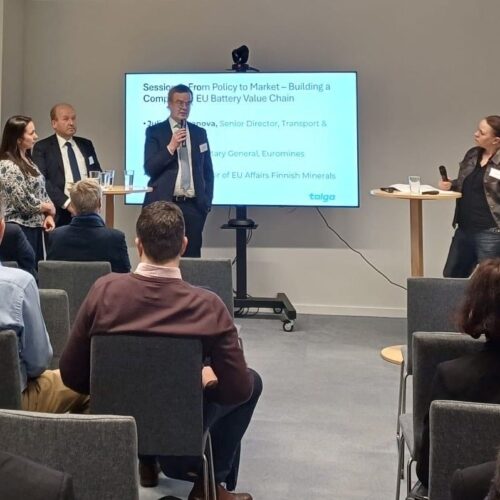
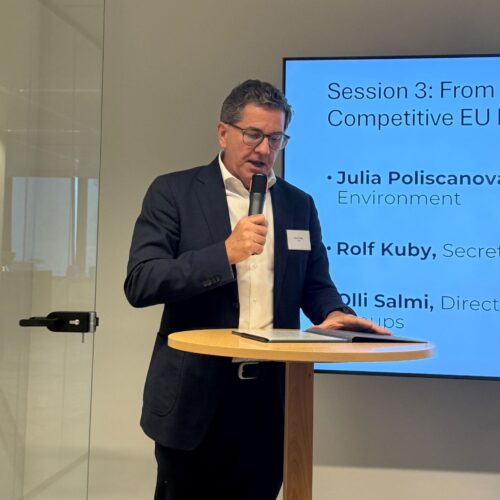
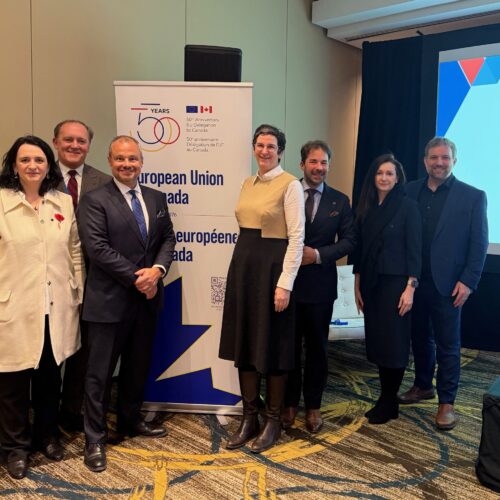
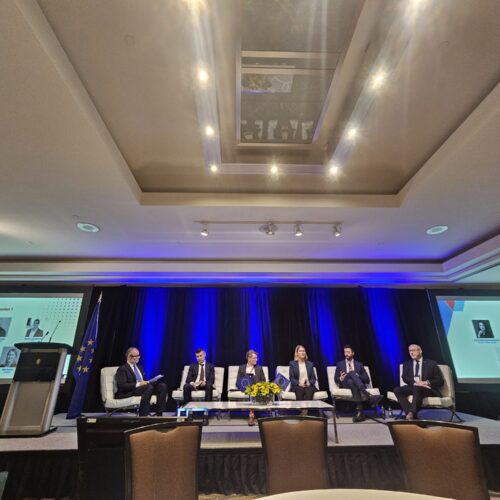
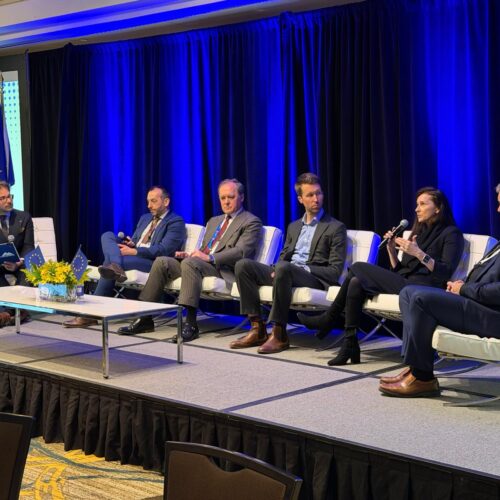
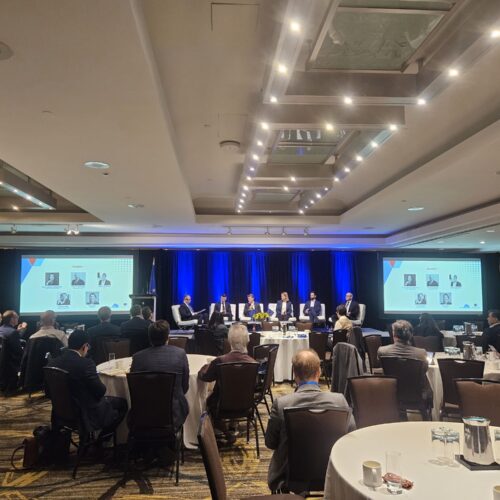
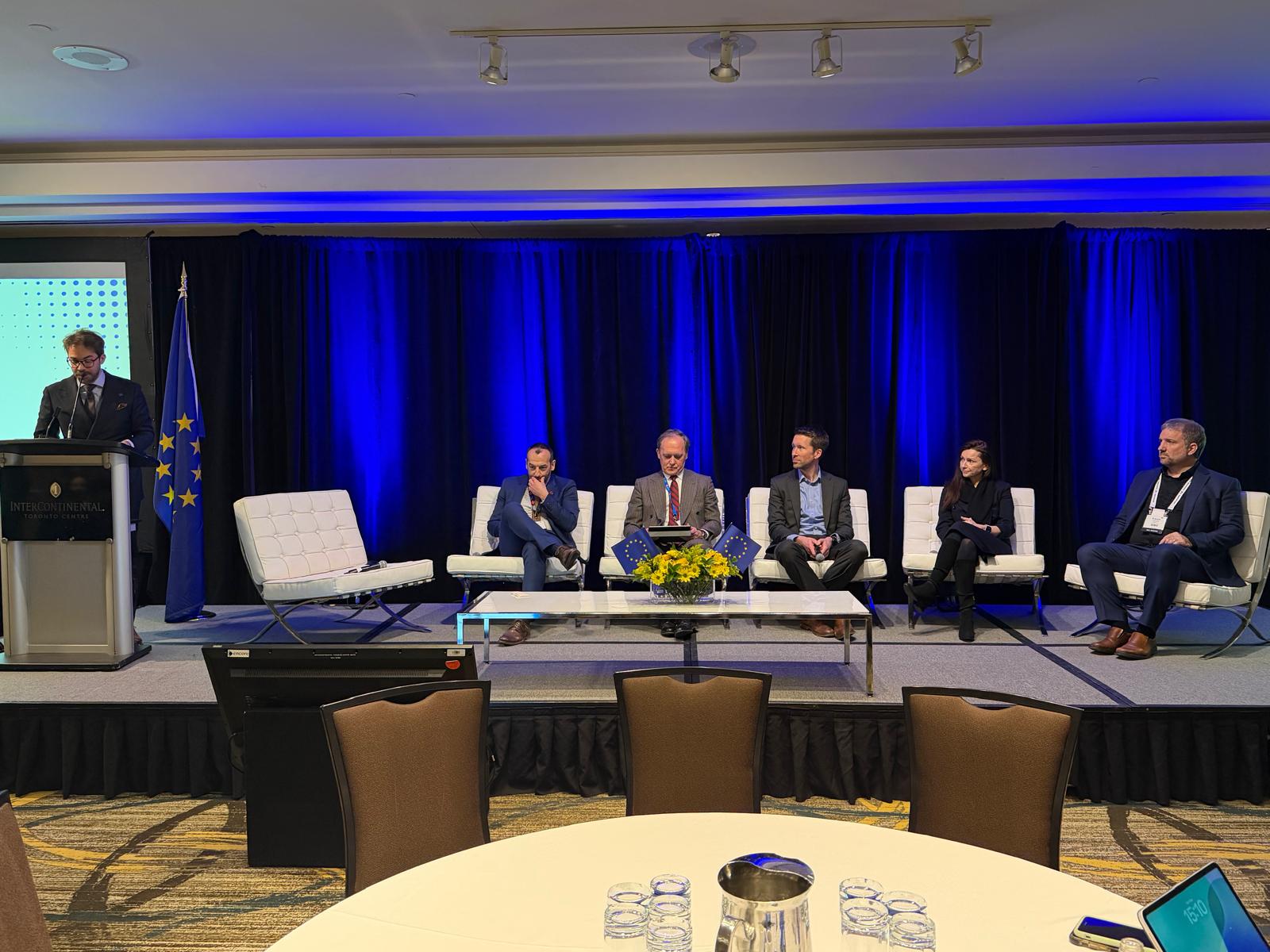
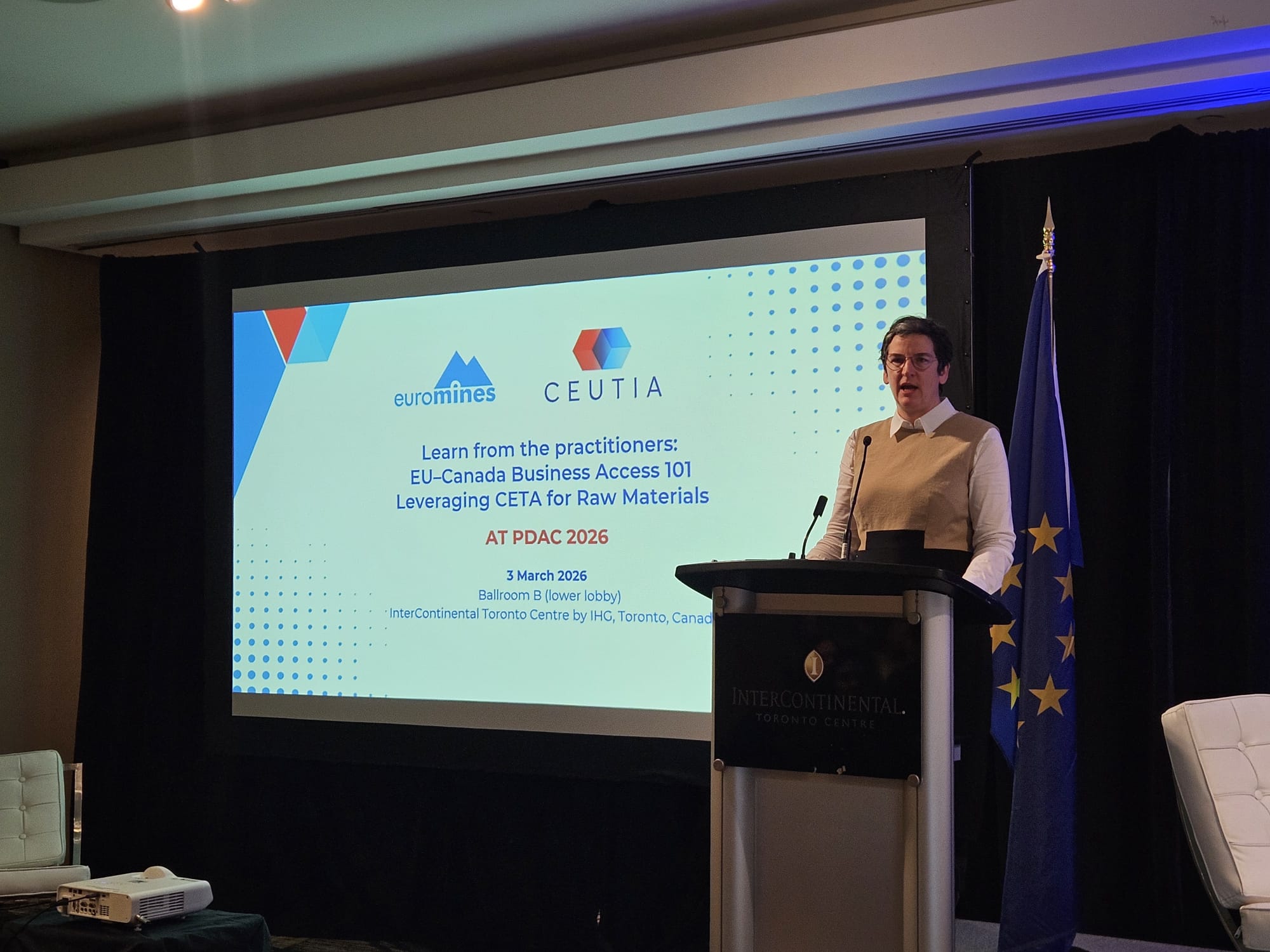
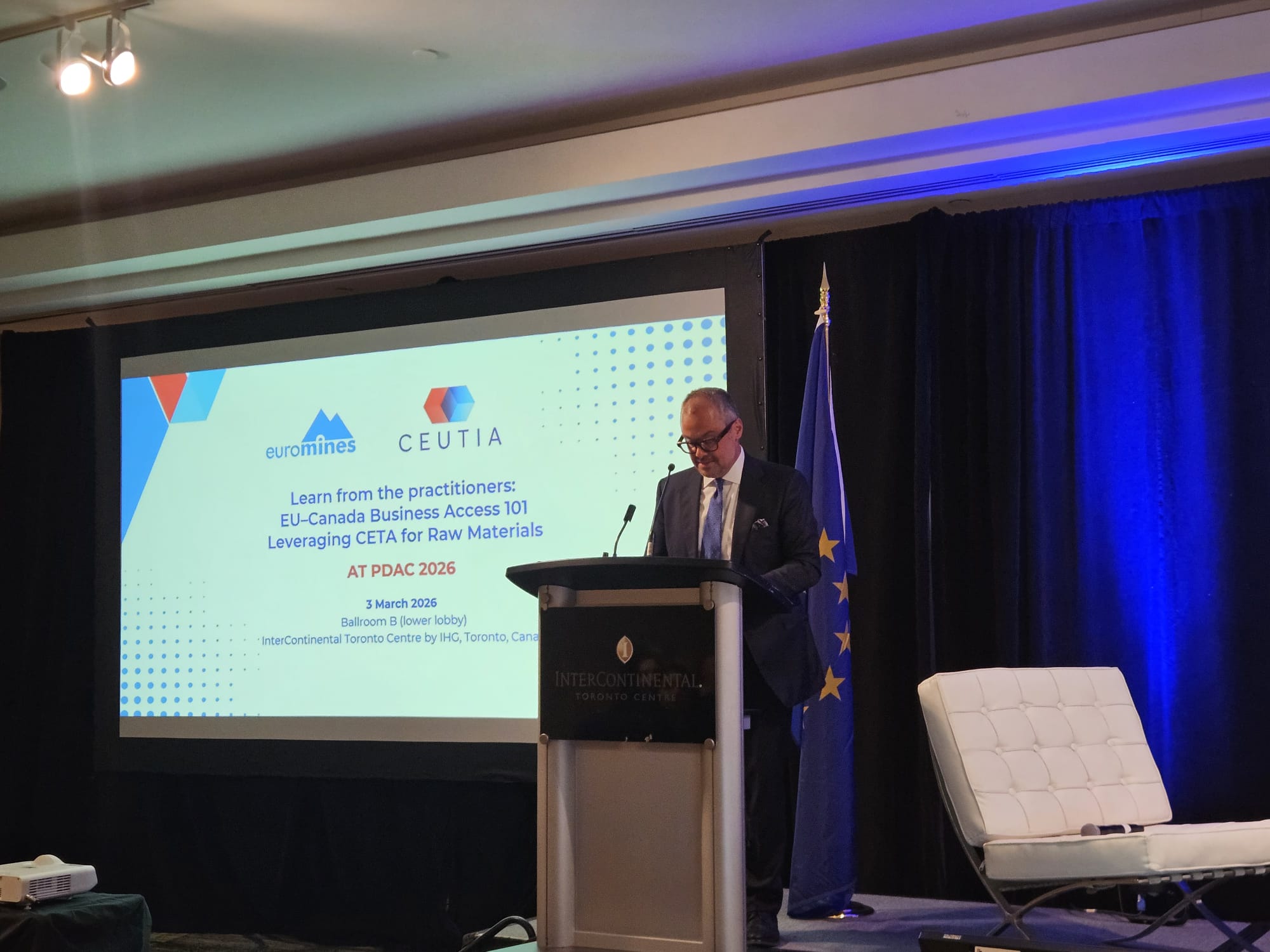
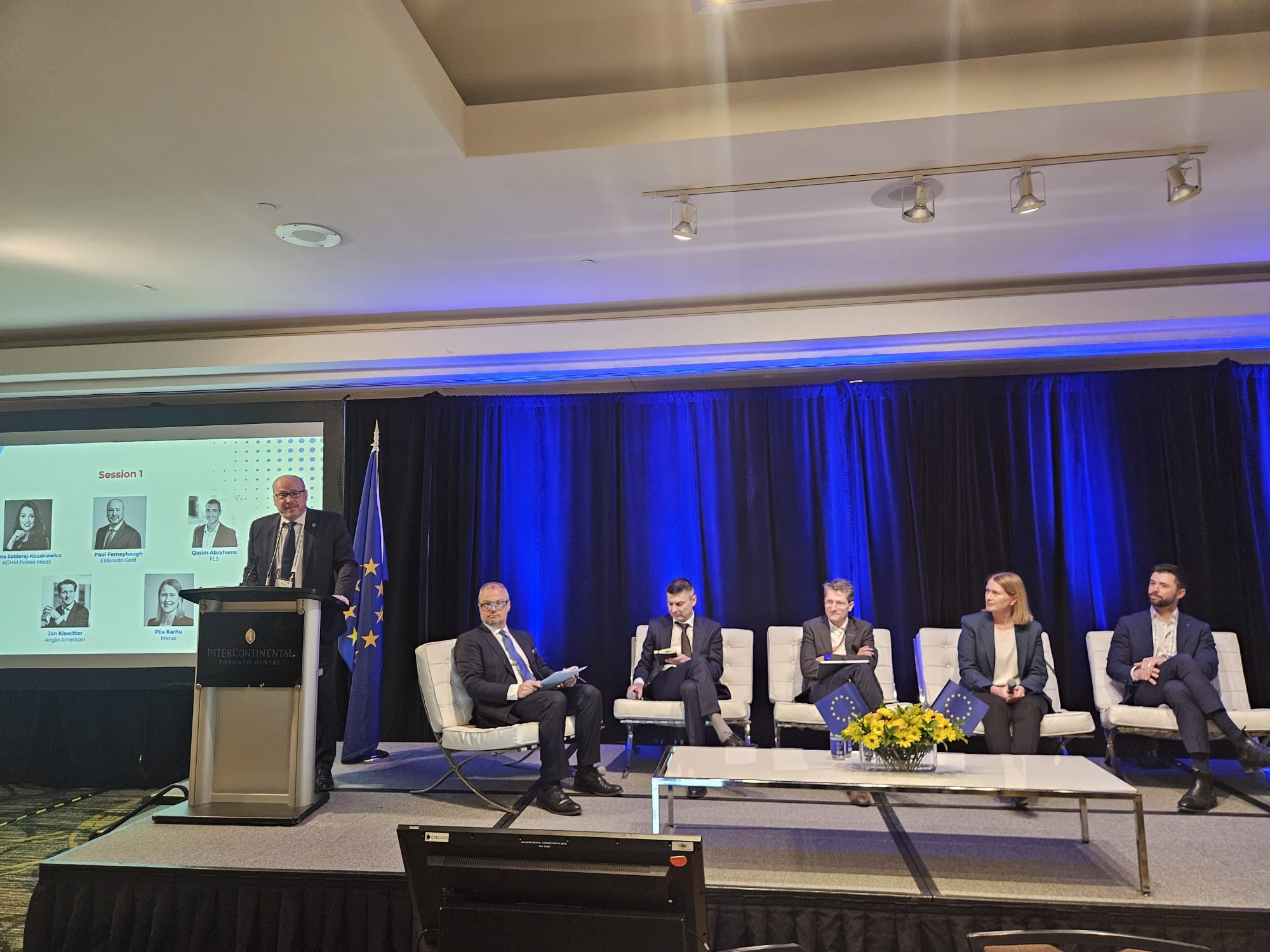
At the Prospectors & Developers Association of Canada (PDAC) 2026 convention, Euromines and the Canada EU Trade and Investment Association (CEUTIA) hosted a high-level side event featuring representatives from the Government of Canada and the European Commission, alongside two panel discussions bringing together EU and Canadian leaders to explore business, trade and financing opportunities under the EU-Canada Comprehensive Economic and Trade Agreement (CETA).

.Key takeaways:

  • CETA is delivering concrete value, improving market access and reinforcing EU–Canada supply chain integration in strategic raw materials.
  • Targeted regulatory alignment is still needed to address remaining blind spots and unlock further investment potential.
  • Investment incentives and financing tools, including tax credits and blended finance models, can play a critical role in strengthening project bankability.
  • Operationalisation is essential: policy ambition must translate into practical, investable projects on the ground.

The discussions underscored that sustained, solutions-oriented dialogue between policymakers, industry and investors is vital to securing resilient, competitive, and sustainable raw materials value chains.

Our speakers included Callie Stewart, Mission of Canada to the European Union and Madalina Ivanica, European Commission.

Panel 1: Unlocking Market Opportunities under CETA

This panel discussion explored how CETA strengthens:

  • Market access and regulatory alignment.
  • EU–Canada integration across the raw materials value chain.
  • Sustainable sourcing for Europe’s clean energy and battery industries.

Speakers included members of Euromines and our Sustainable Mining Initiative:

Panel 2: Financing Opportunities for Strategic Raw Materials Projects

This panel discussion focused on funding solutions to accelerate mining and refining projects, covering:

  • Public and private financing instruments
  • Investment de-risking strategies
  • Mobilization of private capital

Speakers included one of Euromines’ members:

Advancing Europe’s Strategic Raw Materials Agenda

PDAC 2026 reinforced that trade agreements, policy alignment, and financing solutions must work together to secure Europe’s raw materials base.

Strengthening European Defense: Dr. Florian Anderhuber on the role of raw materials at the Security of Supply Symposium 2026

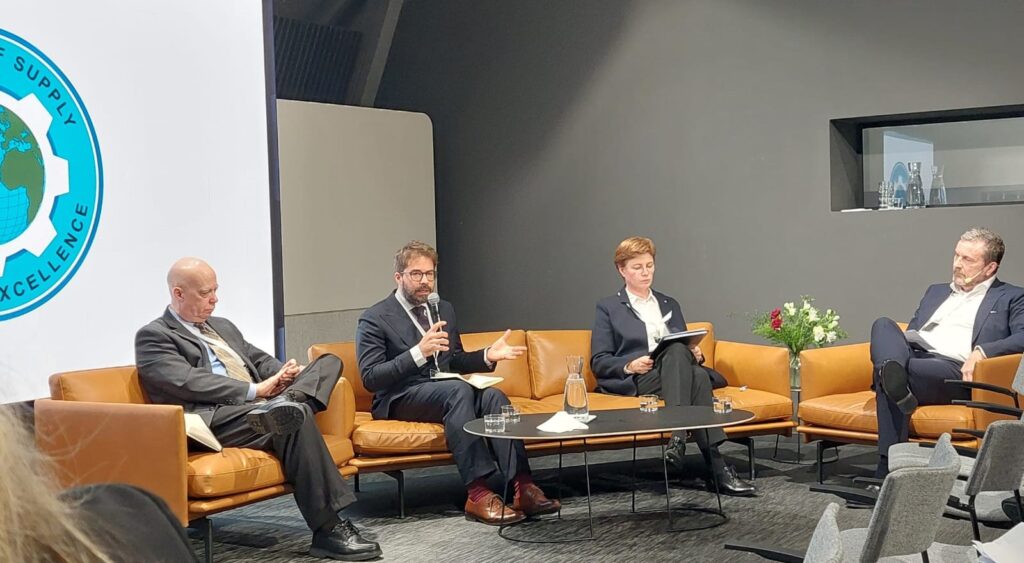
Dr. Florian Huber at Security of Supply Centre of Excellence Security of Supply Symposium 2026

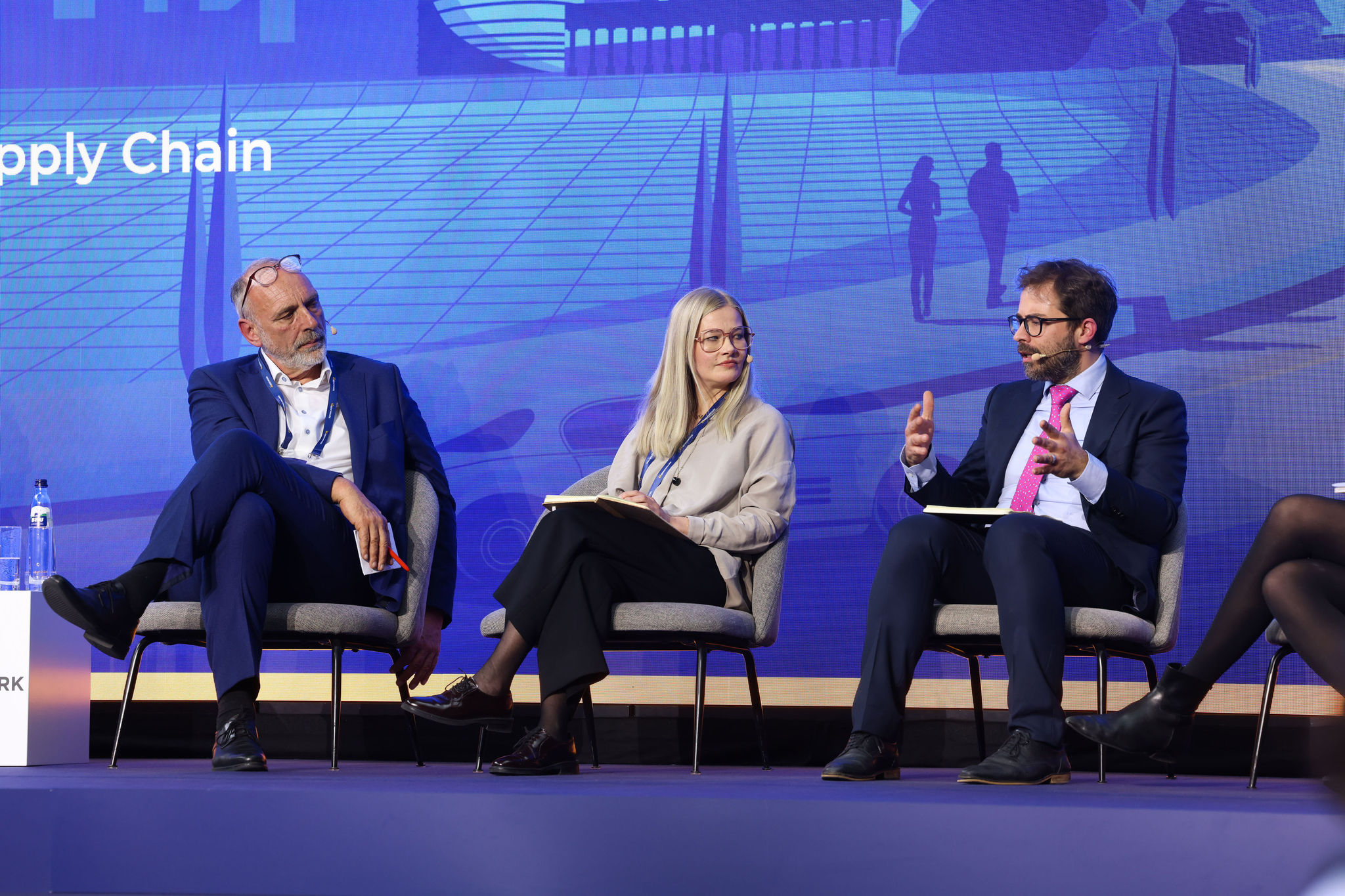
In the photo (L to R): Dr. Arnold C. Dupuy (George Mason University), Dr. Florian Anderhuber (Euromines), Katarzyna Palaczanis (ECGA), and Stefan Lundewall (LKAB)

At the Security of Supply Centre of Excellence’s Security of Supply Symposium 2026, Dr. Florian Anderhuber, Deputy Director General of Euromines, participated in a panel discussion on the critical importance of metals and minerals in defense. Dr. Anderhuber highlighted the inseparable link between raw materials and defense, emphasising that securing the supply of mission-critical raw materials is essential for preserving European values such as freedom and democracy.

He stressed that stable and sustained demand for raw materials is necessary to maintain consistent production and avoid fragmented value chains. Additionally, defense industries can play a pivotal role by providing long-term demand signals, which would enable scaling up production, improving supply chain resilience, and enhancing Europe’s global competitiveness.

Key points raised by Dr. Anderhuber include:

  • Funding: The SAFE and Defense Fund provide essential financing opportunities for raw materials, but Member States need to adopt these mechanisms.
  • Demand signals: The defense sector is uniquely positioned to offer long-term, reliable demand signals for critical materials, emphasising the importance of security of supply.
  • Bespoke solutions: Tailored solutions are required to address bottlenecks within raw materials supply chains and ensure their smooth functioning.

This discussion highlighted the critical role of raw materials in strengthening both European defense capabilities and broader industrial resilience, underscoring the need for action to secure the future of Europe’s raw materials supply.

Member Spotlight: Savannah Resources Plc

Euromines Member Spotlight - Savannah Resources PLC

Savannah Resources Plc is developing the Barroso Lithium Project in Portugal – Europe’s largest spodumene lithium deposit – and recognised as a “Strategic Project” under the European Critical Raw Materials Act in 2025.

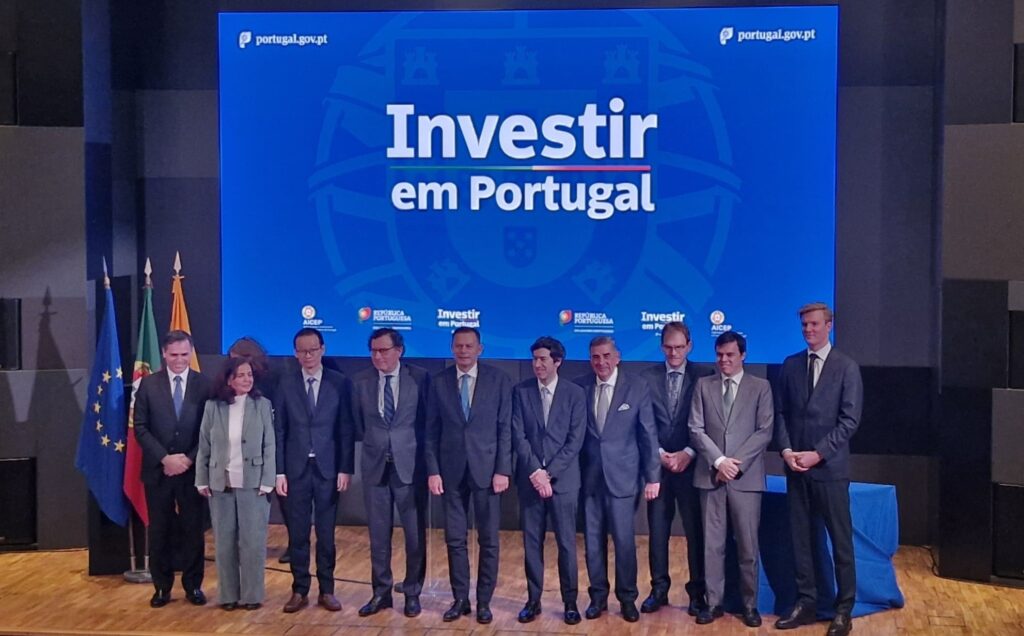
Savannah has this January been awarded a non-reimbursable grant of up to approximately €110 million from the Portuguese Foreign Investment Agency (ACIEP), on behalf of the Portuguese Government, supported by national funds under the European Commission Temporary Crisis and Transition Framework. This is a highly significant financial contribution towards the planned construction of the Project and reflects the Portuguese State’s support for an asset considered of national and European importance in a strategic new industry for Portugal and the European Union.

The Grant is divided into two parts: 75% (€82.25 million) to support the Project’s initial development capital expenditure (CAPEX), and 25% (€27.42 million) linked to performance milestones during the operational phase.

Once in operation, the Barroso Lithium Project will provide a long-term, locally sourced supply of lithium raw material for Europe’s lithium battery value chain. The Project will produce enough lithium (contained in c.190,000 tpa of spodumene concentrate) to support approximately half a million vehicle battery packs per year, contributing to the Critical Raw Materials Act goal of ensuring a minimum 10% of European endogenous lithium production from 2030.

This milestone is particularly important for Savannah because it:

  • Underlines the Portuguese State’s support for the Project’s delivery and for the development of a sustainable lithium battery value chain in Portugal.
  • Represents a financial commitment that will make a meaningful contribution to CAPEX.
  • Supports regional development and local industry, strengthening long-term opportunities in the Barroso area; and
  • Helps lay the foundations for new industry and economic growth in Portugal.

Savannah recognises the responsibility that comes with delivering a Project of national and European relevance. The company remains committed to developing and operating the Barroso Lithium Project in line with best international standards, and to delivering tangible value for the people and organisations in the Barroso region with whom Savannah already works. Portugal´s efforts in building a sustainable and resilient battery value chain that benefits current and future generations were put in evidence by the list of other projects awarded financial support: Lifthium’s plans for a lithium refinery; Topsoe’s plans for a cathode factory, and CALB’s plans for a battery factory. As Europe accelerates its focus on strategic raw materials and resilient supply chains, constructive industry dialogue is more important than ever. 

As Euromines marks its 30th anniversary, Savannah values being part of a network that supports collaboration with industry peers and stakeholders, and engagement with policymakers to strengthen the role of mining in Europe through transparency, best practice sharing, and forward-looking policies.

Looking ahead, 2026 is a strategic year for Savannah as it concludes its DFS and finalises its funding structure, in order to start production in 2028. We aim to contribute to the future of European mining by maintaining strong environmental and social performance, reinforcing a transparent approach for stakeholders and investors, supporting regional regeneration in areas such as Barroso, and demonstrating how European mining can drive both competitiveness and the energy transition, while upholding high ESG standards.

“Our Project will be transformative, first of all for our region of Trás-os-Montes, through job creation and local economic development, but also for the country as it represents the origin of the lithium battery value chain, attracting other projects further downstream, and, of course, for Europe by being able to contribute decisively to energy independence and to the green transition that will mark the coming years and decades.”

— Emanuel Proença, CEO, Savannah Resources

JOINT PRESS RELEASE: Energy-intensive industries set out demands for affordable electricity in the EU

Europe’s energy-intensive industries have set out a series of proposals to ensure that the EU’s upcoming Electrification Action Plan delivers on its objectives to stimulate and boost electricity consumption in industry. In a joint position paper, industries warn that persistently high electricity prices risk undermining industrial competitiveness and decarbonisation efforts. They call for a policy framework that will enable EU industry in pursuing decarbonisation and industrial competitiveness.

Energy-intensive industries employ around 2.6 million people across the EU and underpin critical and strategic value chains. Yet, years after the energy price crisis, investment in electrification remains stalled and the competitiveness gap with third countries widened. Electricity costs in Europe continue to be structurally high and volatile, contributing to plant closures, reduced output and delayed decarbonisation investments.

Recent data show that EU electricity demand barely increased in 2024, highlighting a growing gap between climate ambition and economic reality. The industries stress that the challenge is not only a lack of available technologies, but mainly the absence of affordable and predictable electricity supply.

Key demands for the EU’s Electrification Action Plan

To make electrification work in practice, the Alliance of Energy Intensive Industries call on the European Commission to ensure that the Electrification Action Plan, expected to be published in May 2026, delivers on a number of priorities including:

  1. Set a competitive benchmark of €50/MWh for total electricity costs for industry;
  2. Guarantee exposed industries access to cost-based electricity;
  3. Maintain the EU’s Emissions Trading System indirect cost compensation beyond 2030;
  4. Invest in grids while keeping network tariffs for industry at a minimum;
  5. Ensure the short-term electricity market works for European industry by carrying a full assessment by June 2026;
  6. Speed up the realisation of the EU Single Market for Energy by increasing interconnectivity and maximising cross-border trading capacity;
  7. Create the enabling conditions to invest in industrial electrification, including OPEX support, rather than setting electrification targets;
  8. Incentivise system flexibility, promoting the contribution of all renewable and low-carbon energy sources.

The Joint Position Paper on the EU Electrification Action Plan is available here.

The Alliance of Energy Intensive Industries brings together European industry associations representing sectors with high energy use. The co-signatories from the Alliance include:

  • Confederation of European Paper Industries (CEPI)
  • Comité de Liaison des Industries de Ferro-Alliages (Euroalliages)
  • Euromines
  • European Ceramic Industry Association (CERAME-UNIE)
  • European Chemical Industry Council (Cefic)
  • European Expanded Clay Association (EXCA)
  • European Industrial Gases Association (EIGA)
  • European Lime Association (EuLA)
  • European Metals
  • European Steel Association (Eurofer)
  • FuelsEurope
  • Glass Alliance Europe
  • International Federation of Industrial Energy Consumers (IFIEC)

Joint Statement – Raw Materials Europe – Revision of the Water Framework Directive

Raw Materials Europe’s Input on the Announced Guidance Document and Revision of the Water Framework Directive

Aggregates Europe, Association des Producteurs Européens de Potasse (APEP), The European Ceramic Industry Association (Cerame-Unie), The European Gypsum Industry (Eurogypsum), Euromines, European & International Federation of Natural Stone Industries (EUROROC), European Expanded Clay Association (EXCA), Industrial Minerals Europe (IMA-Europe).

The undersigned associations of Raw Materials Europe (RME), representing the European non-energy extractive industry panel, believe that the recently announced initiatives under RESourceEU and the Environmental Omnibus package (VIII) are important steps in the right direction to unblock permitting in the European non-energy extractive industry.

Pending the resolution of what may constitute the most significant challenge to establishing an integrated and resilient raw materials value chain, the announced revision of the Water Framework Directive (WFD), Raw Materials Europe would like to take this opportunity to provide input to the guidance document that was announced, in order to address the interim needs until the revision is completed.

Raw Materials Europe is urging:

Targeted amendments to the WFD to address the permitting issues. This concerns the following points:

  • Improvement of exceptions to the management objectives (Article 4(7) WFD).
  • Extension of deadlines (Article 4(4)(c) WFD)
  • Improvement of less stringent management objectives (Article 4(5) WFD)
  • Pragmatic definition of ‘deterioration’

Be involved in the upcoming EU Commission work on the Guidance and the WFD review, to ensure that the solutions proposed are workable, the expertise of the raw materials sector that encounters these bottlenecks daily must be integrated into the drafting process for both the guidance and the amendments to the WFD.

The ongoing EU legislative process on Integrated Water Management (“EU Water Package”) should be suspended in the EP and Council. This is because the subject matter of this EU Water Package process includes fundamental issues of water law mentioned above; it further tightens the WFD in particular by codifying the far too strict ECJ-Definition of “deterioration” in the WFD. Adopting the outcome of the EU water Package trilogue – agreed before the ReSourceEU and Environmental Omnibus – would create a fait accompli and undermine the measures announced by the Commission in the Environmental Omnibus and ReSourceEU (Guidance and Revision of the WFD), effectively rendering them absurd.

1) Guidance cannot replace modifications of the Water Framework Directive

Firstly, we would like to emphasize that the guidance document cannot replace the necessary modifications and adaptations to the environmental legislative framework. The legislative framework, in its current iteration, has increasingly become a barrier to industrial investment, which consequently prevents us from meeting important societal needs. The proposed guidance document on the Water Framework Directive can only serve as an additional interpretation document. It cannot replace the substantive legislative changes necessary in the Water Framework Directive itself.

As addressed in our previous Joint Position Paper “The impact of the Water Framework Directive revision on the competitiveness of the European non-energy extractive sector”, the Water Framework Directive and its far-reaching goals create legal and practical challenges. An important consideration is the question of whether the objectives of the WFD can be practically reached by 2027 across all Member States; moreover, there are significant uncertainties connected to the derogations and exemptions of the WFD. These uncertainties need to be addressed urgently at the level of the Water Framework Directive itself. Raw Materials Europe welcomes the EU Commission´s announcement of a review and subsequent revision of the WFD.

From RME’s perspective, particular attention must be paid to the important derogation set out in Article 4(7) of the WFD and must be addressed in such a revision. In its current wording, Article 4(7) does not provide for any derogation in the case of failure to achieve good chemical status of surface waters, and it does not allow derogations for impacts stemming from emissions.

Therefore, we suggest that Article 4(7) should be amended so that no constellation of circumstances is excluded from the scope of this exemption from the outset.

The Article 4(7) amendment text proposal of our previous Joint position paper is also provided below:

4.7. ‘Member States will not be in breach of this Directive when (our proposed amendments shown crossed out in red):
— failure to achieve good groundwater status, good ecological surface water status or, where relevant, good ecological potential or to prevent deterioration in the status of a body of surface water or groundwater is the result of new modifications to the physical characteristics of a surface water body or alterations to the level of bodies of groundwater, or
— failure to prevent deterioration from high status to good status of a body of surface water is the result of new sustainable human development activities and all the following conditions are met:

(a) all practicable steps are taken to mitigate the adverse impact on the status of the body of water;
(b) the reasons for those modifications or alterations are specifically set out and explained in the river basin management plan required under Article 13 and the objectives are reviewed every six years;
(c.) the reasons for those modifications or alterations are of overriding public interest and/or the benefits to the environment and to society of achieving the objectives set out in paragraph 1 are outweighed by the benefits of the new modifications or alterations to human health, to the maintenance of human safety or to sustainable development, and
(d) the beneficial objectives served by those modifications or alterations of the water body cannot for reasons of technical feasibility or disproportionate cost be achieved by other means, which are a significantly better environmental option.’

The objective of adjusting the design of Article 4 (7) of the WFD is to make the provision in the first amendment applicable to good chemical status, not just ecological status of surface water. This is even more important now that the Commission has proposed that river basin-specific pollutants should become part of chemical status. The second amendment– ‘modifications to the physical characteristics’ – means that a derogation may be granted for all types of modifications to a water body, not just for modifications to hydro-morphological characteristics. Lately, the third amendment – ‘characteristics of a surface water body’ – allows the inclusion of modifications to a groundwater body as well as to a surface water body.

Additionally, the Water Framework Directive should include a practical and proportionate definition of the term “deterioration”; this definition must allow for flexibility and introduce a distinction that not every impact on the water quality should be considered a prohibited deterioration.

An additional consideration is that the option to extend the deadline for achieving good status under Article 4(4)(c.) of the WFD only exists until 2027 in cases of anthropogenic impacts, and thereafter only on the basis of ‘natural conditions’, which is unlikely to apply in many cases if a long-term industrial facility with water utilisation is to be continued beyond 2027. After 2027, it must be possible to continue industrial activities. A realistic extension of the deadline option is required here, coupled with an evaluation of whether the ‘no further deterioration’ requirement in Article 4(5), as applied to the less stringent objectives, could be removed. Alternatively, the consideration of the implementation of a stepwise approach, accompanied by a flexible definition of deterioration.

Unfortunately, the recently negotiated agreement on the revised Water Framework Directive doesn’t take into consideration the concerns of industry. Rather, it increases the existing difficulties associated with new projects trying to obtain the needed permits, by introducing new and stricter environmental quality standards without appropriate provisions for derogations under the current Directive.

2) Scope and applicability – Announced Guidance on Water Framework Directive

The guidance should provide clarification on the practical challenges and uncertainties that are created by the Water Framework Directive and its far-reaching goals and obligations as they are applied.

However, regarding the most important issue of exemptions, guidance is not an adequate means to deliver the necessary adjustments. Such amendments must be incorporated directly into the legal text of the WFD itself.

A guidance document, however, can provide interpretative guidance on the following points:

Derivation of Environmental Quality Standards (EQS) and bioavailability

Administrative estimates of EQSs have the power to stop industrial projects, even where project-specific, evidence-based assessments indicate no actual negative impact of conditions for aquatic life. This is because of the narrow application of the term “deterioration”. The guidance should address the methodology of how these estimates are conducted and give precedence to real deterioration evidence. It must be possible to make site-specific, or at least river basin specific, adaptations in the application of general EQSs.

The guidance should stress that all EQSs are to be based on scientific evidence and address real risks. Any lack of comprehensive scientific knowledge shall not be compensated with the application of multiple layers of precautionary assessments when establishing EQSs, as this may result in unreasonably or artificially low limit values that do not correspond to the actual water quality situation, particularly concerning naturally occurring elements, substances, and compounds.

It would also be appropriate to reiterate and strengthen the current recommendation (in CIS Guidance No 27) on the consideration of bioavailability. All EQSs for metals should refer to bioavailable concentrations to avoid unreasonably and unnecessarily low EQSs that do not correspond to actual impact levels of toxicity. Where bioavailability models are not available, they must be developed in parallel with the derivation of an EQS.

Compliance with EQS

The guidance ought also to address compliance with Environmental Quality Standards. Specifically, it could be clarified that the EQS compliance should be assessed at the level of the water body as a whole, rather than at individual or isolated measuring points, taking into account other factors that provide for representativity. A water body should be classified as deteriorated only when the impact has an effect on its ecological and/or societal functions.

Natural Background concentrations

The Guidance should clarify how to take into account ‘natural’ background concentrations when assessing the chemical status and EQSs of surface water and groundwater. Natural background should be interpreted as ‘ambient’ background, rather than pre-industrial background, in order to account for Europe’s long history of human activity which has affected background concentrations. It would also seem appropriate to stress that increased concentrations of naturally occurring substances, which are negligible in relation to natural (or ambient) background, should not result in a water body being classified as deteriorated. The guidance must also address the fact that natural background concentrations can vary greatly in concentration also within a small geographic range.

JOINT PRESS RELEASE: 18 organisations call for smarter permitting to support EU competitiveness

In a joint statement, sectoral and industrial organizations from the energy, raw materials, manufacturing, and infrastructure sectors lay down recommendations to overcome Europe’s permitting challenge and to support the EU’s competitiveness agenda.

Permitting has emerged as one of the most serious structural bottlenecks for Europe’s industrial revival, leading to delayed strategic investments, slowing down the energy transition, undermining competitiveness, and threatening the continent’s long-term industrial base and security of supply.

The European Commission’s permitting-related initiatives represent important steps forward, acknowledging permitting as a strategic priority and introducing clearer timelines, targeted streamlining measures, and a stronger focus on accelerating projects of strategic importance.

18 European and national sectoral and industrial organizations from the energy, raw materials, manufacturing, and infrastructure sectors have joined forces to establish the Informal Coalition on Permitting (ICP), a cross-sectoral platform dedicated to improving and accelerating permitting processes across the EU.

 Together, they call on EU policymakers to:

  • Make permitting a strategic enabler of Europe’s competitiveness, resilience, and industrial value chains.
  • Streamline and align permitting requirements arising from EU legislation and rules for cross-border projects to reduce duplication and legal uncertainty.
  • Introduce enforceable time limits, digital tracking, and accountability mechanisms.
  • Strengthen permitting authorities through resources, capacity, and modern digital tools.

The coalition is co-chaired by Ms. Gabrielle van Melkebeke, Senior Policy Manager for Sustainability and Environment at IOGP Europe, and Dr. Florian Anderhuber, Deputy Director General at Euromines.

“Effective permitting for projects of strategic importance is essential to Europe’s energy transition, resilient value chains and industrial competitiveness, without compromising environmental protection. Our aim is to ensure that Europe can deliver the projects needed to reach its net-zero targets, secure the future of its industrial base, and remain an attractive destination for investment. This coalition brings together diverse expertise to advance solutions that are both ambitious and workable.” – Gabrielle van Melkebeke, ICP Co-Chair and Senior Policy Manager for Sustainability and Environment at IOGP Europe. 

“Europe cannot meet its strategic industrial, defense and climate objectives without modern, predictable permitting systems. By pooling insights across sectors, the coalition will help policymakers understand where reforms are most urgently needed and how to implement them to support high standards, investment certainty and regulatory predictability.” – Dr. Florian Anderhuber, ICP Co-Chair and Deputy Director General for Energy, Climate, Sustainability at Euromines.

Watch the video interview of Dr. Florian Anderhuber, ICP Co-Chair and Deputy Director General for Energy, Climate, Sustainability at Euromines here or below.

About the coalition:

Representing 18 European and national trade associations, technology providers, project developers, and supply chain partners, the coalition aims to provide a unified, evidence-based voice to support EU institutions and national governments in modernizing Europe’s permitting systems.

Lorem ipsum dolor sit amet, consectetur adipiscing elit. Ut elit tellus, luctus nec ullamcorper mattis, pulvinar dapibus leo.

Euromines President Jan Moström at European Industry Summit 2026: A Call for Action on Europe’s Industrial Future

At the European Industry Summit 2026 in Antwerp, over 500 business leaders, factory workers, and top European officials came together to emphasise the critical need for a strong European industrial base to secure the continent’s future.

Jan Moström, President of Euromines and Group President and CEO of LKAB, highlighted the importance of raw materials for Europe’s prosperity, security, and clean energy transition. He stressed that energy costs and Europe’s electricity market design, which results in high prices, are major barriers to investment in electrification and decarbonisation.

During the summit, Moström met with Teresa Ribera, Executive Vice-President of the European Commission, to discuss Europe’s industrial strategy and raw materials. Key takeaways included:

Key Priorities for Europe's Industrial Future:

  • Strategic Autonomy & Permitting Reform: Europe needs a strong domestic production base to reduce dependencies and drive the green transition. While Circular economy is a key pillar of Europe’s strategic autonomy and will increasingly support the supply chain, it alone cannot meet near-term demand. With many key commodities not yet available at scale to re-enter the loop, policy must ensure a balanced approach combining circularity and responsible domestic production. This requires a permitting omnibus and coherent demand-side measures that make the legislative framework an enabler, not a bottleneck, unlocking the full raw materials value chain from mining to recycling while strengthening industrial competitiveness.
  • Access to Finance: Europe must leverage the next Multiannual Financial Framework (MFF) to provide targeted incentives and tools that unlock both private and public investment across the raw materials value chain, ensuring strategic autonomy and a competitive, sustainable industrial base.
  • Energy Competitiveness: Raw materials production is highly electrified and energy intensive, yet Europe’s electricity market design drives structurally high power prices that weaken competitiveness. A well-functioning energy market that delivers affordable, clean baseload power is essential to maintaining Europe’s attractiveness for long-term industrial investment and achieving both strategic autonomy and climate objectives.

Moving Forward:

  • A permitting omnibus rooted in a structural legislative review of trade-offs and bottlenecks – not only simplification of administrative procedures.
  • A financial framework that sets the right incentives: funding for raw materials to ensure a cost-competitive and responsible domestic production, demand stimulation for European responsible raw materials and a strong mandate for the upcoming Raw Materials Centre.
  • A reform of the electricity market design that improves the marginal price-setting to reward those who electrify to decarbonise.

The Antwerp Declaration Community is calling for Emergency Industrial Policy Measures to address these challenges and ensure Europe’s long-term competitiveness.

Read our press release here.

Antwerp Declaration for an Industrial Deal

Read about the Antwerp Declaration for an Industrial Deal here.

PRESS RELEASE: Industry urges the EU to act on energy and raw materials

Antwerp, 11 February 2026 – Ahead of the European Council meeting in Alden Biesen, the Antwerp Declaration Community, representing more than 1,300 companies, associations and trade unions across Europe, called on EU Heads of State and Government to take urgent and decisive action to restore Europe’s industrial competitiveness and secure the raw materials and energy required for Europe’s clean, digital and security transitions. 

At the European Industry Summit in Antwerp, business leaders, workers and senior policymakers warned that Europe’s competitiveness crisis has become structural. Strategic value chains are under growing pressure from high energy costs, slow and unpredictable permitting and rising dependencies on third countries for energy and raw materials, underscoring the need for immediate political action at the highest level. 

For Euromines, Europe’s mining and raw materials sectors are a cornerstone of industrial resilience and strategic autonomy. Reducing external dependencies must go hand in hand with ensuring that Europe’s transformation is supported by an industry capable of meeting society’s needs, sustainably, competitively and at scale. 

Jan Moström, President of Euromines, Group President and CEO, LKAB, said: “Europe cannot secure its prosperity, security or clean transition without its own raw materials. Mining is already highly electrified and main barrier to further investment is energy cost and supply. Europe’s current market design delivers structurally high electricity prices that do not reflect the cost advantage of renewables. Without affordable, clean baseload power, there is no business case to invest, electrify and decarbonise in Europe. 

The Antwerp Declaration Community urges EU leaders to ensure that the Alden Biesen meeting becomes a turning point, delivering bold, coordinated measures that secure raw materials, restore industrial competitiveness and translate the Clean Industrial Deal into tangible results already in 2026. 

Read the Antwerp Call to Action here. 

About Euromines

Euromines, the European Association of Mining, Metal Ores & Industrial Metals, is the voice of European metals and minerals mining industry. Our primary goal is to promote responsible industry practices and ensure that mining receives appropriate consideration in EU policymaking. As a collaborative network, Euromines brings together the Secretariat and Members to assess the impact of European and international policies on the industry, shaping unified positions and actions. Representing both large and small companies, a well as their subsidiaries across Europe and beyond. Euromines advocates for a sustainable and competitive mining sector. 

For media enquires, please contact:

Anna Zanetti

zanetti@euromines.be

Joint Statement – EEIs – Energy and Carbon Costs

Preventing Irreversible Deindustrialisation: Europe Must Act Now on Energy and Carbon Costs

Europe needs competitive energy-intensive industries

Energy-intensive industries (EIIs) form the backbone of critical and strategic value chains that underpin the EU economy and society, including transport, construction, power generation, batteries, semiconductors, food security and defence. They are indispensable to the energy and digital transitions, industrial decarbonisation, tackling the housing crisis and safeguarding the EU’s strategic autonomy. In the EU, EIIs represent a turnover of over 1.5 trillion € and 6.6 million direct employees.

EIIs are losing competitiveness and cannot invest under current conditions leading to massive plant closures

Europe’s EIIs are under severe pressure. Competitiveness and investments are being undermined by:

1. The lasting impact of the energy crisis, with energy costs (including wholesale market prices) still twice as high as pre-crisis levels;

2. Rapidly increasing costs, in particular carbon costs, with the CO₂ price now around four times higher than in the pre-Covid period (2020) and far above other carbon schemes;

3. Unfair trading practices and severe global trade disruptions, further aggravated by US tariffs.

As a result, 1.5 million jobs were lost in EIIs since 2008 and the situation is deteriorating fast with production levels in 2025 having declined by up to 40% and by over 14% for most sectors compared to 2018. The EU trade balance of EIIs is increasingly negative since 2018 and it is estimated that around 200.000 jobs were lost among EIIs in the EU in the year 2025. This is a critical situation in a time where
self-sufficiency is becoming increasingly important.

At the same time, regulatory costs for EIIs are set to continue increasing in the coming years, while the negative impacts of unfair trade practices are expected to intensify both within the EU and on export markets. Imports from countries with lower environmental and social standards are therefore projected to grow further and faster if no fundamental and urgent policy shift occurs. In this context, new investments are being postponed, and bankruptcies are multiplying at an accelerating pace, placing Europe’s industrial base at serious risk.

Call for immediate measures for EIIs adapted to the current crises and global disruptions

Against this backdrop, and ahead of the informal meeting of EU leaders on competitiveness scheduled for 12 February, EIIs call on the EU to take needed immediate action. Priority must be given to addressing rising carbon price and costs and persistently high energy prices and costs, while swiftly implementing the measures announced under the Clean Industrial Deal, notably on trade defence.

1. Cut total energy costs for Energy Intensive Industries

Europe must urgently reduce total industrial energy costs. EIIs call for concrete short-term initiatives to bring down total energy system costs immediately, including network charges, EU national taxes and levies, combined with a clear roadmap for a sustained long-term reduction in energy costs to restore the global competitiveness of EU manufacturing.

To make electrification economically viable and preserve the already electrified industrial processes, all available instruments should be mobilised to bring industrial total electricity costs in the EU closer to 50 €/MWh (cf. Draghi report), under current global market conditions rather than targeting a percentage of electrification. In parallel, the Clean Industrial Deal State Aid Framework (CISAF) must be urgently strengthened to provide effective support for all EIIs without conditionalities.

2. Stop any increase in carbon costs in 2026

The additional foreseen increases in carbon costs for EIIs in 2026 will be detrimental, given the severity of the current crises and the international context, and considering that the key precondition for industrial decarbonisation—access to internationally competitive, low-carbon and renewable energy and adequate infrastructure—will not be met in 2026 or in the following years.

EIIs therefore call for emergency measures to shield the European economy from additional carbon costs for example by suspending as of 2026 further ETS benchmark reductions – and the application of the cross-sectoral correction factor (CSCF) – which will otherwise result in a loss of up to 34% in free allocations for EIIs compared to 2021-2025.

Increasing carbon costs today runs directly counter to the Clean Industrial Deal objective of restoring competitiveness and enabling future decarbonisation investments. On the contrary, it would further erode companies’ capacity to invest. In that respect, it is also essential that ETS revenues are fully redirected back to the ETS sectors affected in order to support decarbonisation investments. An effective response to carbon cost pressures cannot wait for the post-2030 ETS review.

3. Tackling unfair trade practices and economic security threats related to EIIs

In respect of the Clean Industrial Deal commitment to “make fast and efficient use of Trade Defence Instruments (TDIs)”, the effective deployment, reinforcement, and extension of the EU’s TDI toolbox have become even more urgent as State-induced global overcapacities and market distortions now affect most of the EU EIIs on a global scale. Addressing them requires:

  • Additional resources for the Commission to manage the surge in TDI investigations;
  • Adapted TDI rules and new instruments to cover new forms of distortions and unfair practices;
  • Mechanisms such as the Foreign Subsidy Regulation capable of tackling or preventing specific unfair practices from non-EU imports.

Furthermore, EIIs must be clearly identified as potential beneficiaries of the measures announced in the Joint Communication of 3 December on strengthening EU economic security.

4. Creating demand for “products proudly made in Europe”

European industries operate under the world’s highest standards in terms of sustainability, carbon footprint, labour conditions, safety and innovation. Yet today, these standards are insufficiently reflected in market demand and prices, and there is no demand for low-carbon products. Regulators, producers, and consumers all have a role to play in ensuring consistency between Europe’s values and purchasing decisions by actively creating demand for products proudly made in Europe.

In this context, EIIs support the introduction of carefully designed local content and European preference considerations in public procurement for specific value chains, grounded in EU-based value added within globally integrated supply chains as well as greater transparency on product origin, in forthcoming legislative initiatives—most notably the Industry Accelerator Act, the Circular Economy Act and the revision of the Public Procurement Directive, while remaining vigilant of any potential supply chain disruptions.

These instruments must rely on coherent principles and criteria, while preserving the internal market and ensuring that demand-side measures, funding tools, consumer information, and procurement rules work together to strengthen EU-based production, resilient complete critical value chains, and Europe’s strategic autonomy.

PRESS RELEASE: Auditors identify key actions to unlock Europe’s raw materials industry.

Brussels, 02 February 2026  The European Court of Auditors’ report on critical raw materials published today sets out a clear diagnosis of the conditions needed to strengthen Europe’s mining and processing industry and secure the raw materials required for the EU’s clean tech ambition. The report confirms that progress depends on targeted action in three key areas: exploration, financing and permitting. Addressing these enablers would significantly improve the delivery of the Critical Raw Materials Act and unlock Europe’s raw-materials potential. 

Key findings highlighted by the auditors include: 

  • Exploration in the EU remains underdeveloped, with only early steps taken to assess Europe’s resource potential and limited activity in high-risk targeted exploration. 
  • Access to finance remains challenging, as mining and integrated mining–processing projects are perceived as high risk due to long timelines, price volatility, energy costs and regulatory uncertainty. 
  • Bankability is constrained by the absence of stable, standards-based markets, limiting long-term investment and access to finance. 
  • Permitting procedures remain lengthy, complex and fragmented, continuing to delay projects despite improvements introduced by the Critical Raw Materials Act. 

“The path to a stronger European raw-materials industry is clear,” said Rolf Kuby, Director General at Euromines. “Investment in exploration, bankable projects and efficient permitting can deliver secure and competitive supply chains.” 

 Euromines and its members are ready to support the EU in its ambition to increase the value chain resilience. This report supports our key message to foster the development of standards-based markets, support long-term investment, and adopt a permitting omnibus that delivers legal clarity, streamlines procedures across EU environmental legislation and ensures faster, more predictable decision-making — while maintaining high environmental and social standards. 

Read the European Court of Auditors’ report here.

About Euromines

Euromines, the European Association of Mining, Metal Ores & Industrial Metals, is the voice of European metals and minerals mining industry. Our primary goal is to promote responsible industry practices and ensure that mining receives appropriate consideration in EU policymaking. As a collaborative network, Euromines brings together the Secretariat and Members to assess the impact of European and international policies on the industry, shaping unified positions and actions. Representing both large and small companies, a well as their subsidiaries across Europe and beyond. Euromines advocates for a sustainable and competitive mining sector. 

For media enquires, please contact:

Anna Zanetti

zanetti@euromines.be